
Estonia from Tartu

This route was brought to you by:
RouteXpert Jan Koelstra - Senior Rx
Last edit: 05-04-2026
 Route Summary
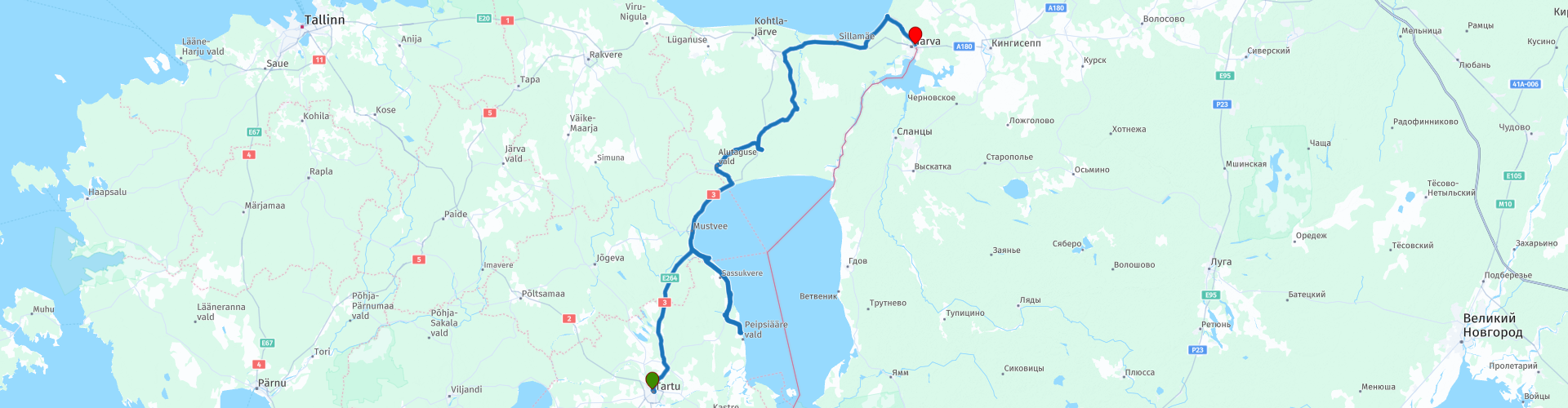
 This route through eastern Estonia takes you from the country's intellectual cradle to the raw edge of Europe. It is a journey full of contrasts: from fairytale castles to Orthodox mysticism.
You start in Tartu, the oldest city in the Baltic states, where the atmosphere is defined by the historic university and the Fountain of the 'Kissing Students'. From here, you drive towards the gigantic Lake Peipus, an inland sea that marks the border with Russia.
Along the shore lie Kolkja, Kallaste, and Mustvee. This region is known for the cultivation of the famous Peipus onions and the sale of dried fish along the roadside. This is the heart of the Onion Route, inhabited by the Old Believers. In Kolkja, you can sample the authentic culture (and delicious pikeperch), while Kallaste impresses with its red sandstone cliffs. Shining between them is Alatskivi, where the snow-white castle—built modeled after the Scottish Balmoral—lends an unexpected touch of British nobility to the Estonian countryside. Mustvee is unique because five different denominations coexist peacefully there.
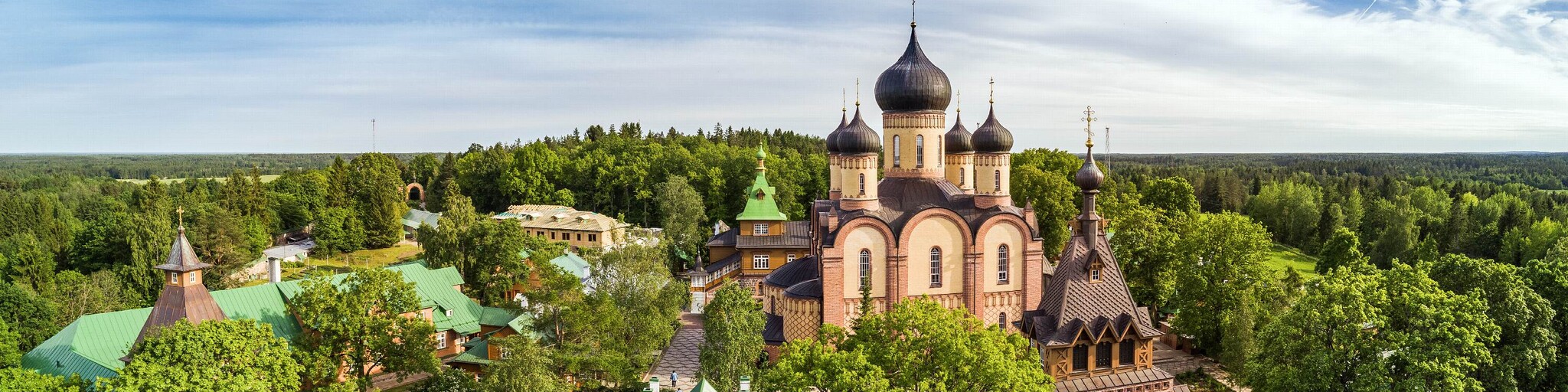
The road to the north leads past Tudulinna and Iisaku, where nature predominates. The observation tower in Iisaku offers a spectacular view over the vast Alutaguse forests. An absolute highlight is Kuremäe, home to the Pühtitsa Monastery. With its iconic green roofs and golden domes, this is the only Russian Orthodox nunnery in Estonia.
The route ends where the river meets the sea. In Narva-Jõesuu, you will find the historic lighthouse and the longest sandy beach in the country. You conclude in Narva, a city with a unique energy. Here, at the mighty Hermannsburg, you stand literally face to face with Russia; the Russian fortress of Ivangorod lies just a stone's throw away on the other side of the river. Variety in landscape and culture, sights, and pleasant roads result in a 4-star rating.
 Share this route


Animation

Verdict


Duration
7h 41m

Mode of travel
Car or motorcycle

Distance
282.71 km

Countries


 RouteXpert Review
 Tartu
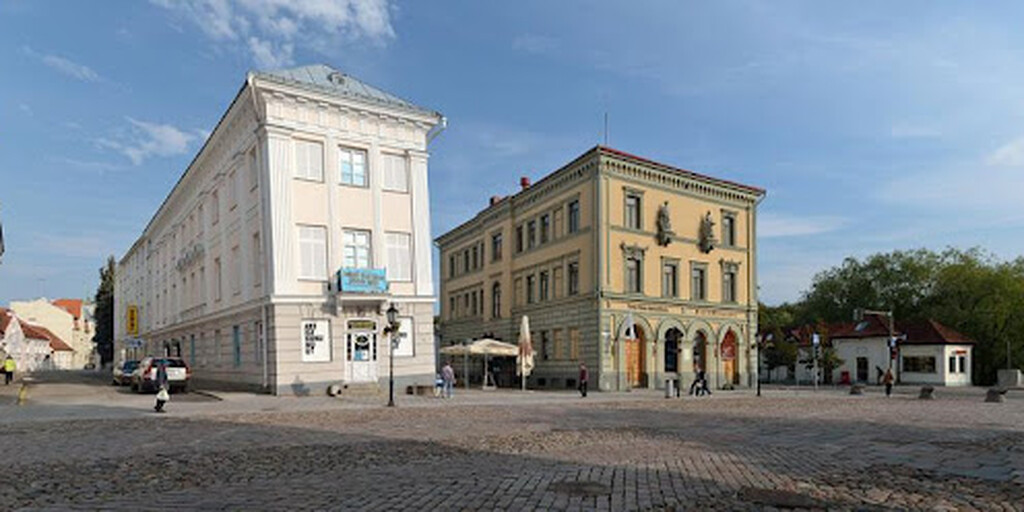
The journey begins in Tartu, the city affectionately called the 'City of Good Thoughts' by the Estonians. Here, there is an atmosphere rarely found in other European cities: a blend of academic seriousness and student nonchalance. The heart of the city is Raekoja Plats, where the city hall, with its soft pink facade, watches over the square. In front stands the fountain with the kissing students, a symbol of the city where the university has set the rhythm since 1632. As you walk up the hill of Toomemägi, the stately ruins of Tartu Cathedral reveal just how grand this past was. It is a place where you can wander among the centuries-old linden trees, across the Angel Bridge and the Devil's Bridge, while wondering how many philosophical discussions have taken place here in the shadows. Don't forget the Supilinn district either, the 'Soup City', where the streets bear names like Pea and Bean and where the wooden houses look as if they were built with a healthy dose of character and a tad too slightly too level.
Kolkja
As soon as you leave Tartu and drive east, the landscape and culture change dramatically. You find yourself on the so-called Onion Route, a strip of land along the shores of the mighty Lake Peipus. In villages like Kolkja, you enter the world of the Old Believers. This religious minority fled Russia in the 17th century to avoid persecution, and their way of life has remained miraculously intact ever since. Here you will find no bustling tourist industry, but simple wooden houses with neatly laid-out vegetable gardens where the famous Peipus onions grow. A visit to the local museum or a simple meal of freshly caught walleye and tea from a samovar is a lesson in humility and tradition. The locals are proud and reserved, but their craftsmanship is visible everywhere, from the hand-knotted fishing nets to the perfect rows of golden-yellow onions offered for sale along the road.
Alatskivi
Just a few kilometers further on, a visual spectacle of a completely different order awaits: Alatskivi. Here stands the snow-white Alatskivi Castle, which, with its countless turrets and battlements, seems to have been transported directly from the Scottish Highlands. Built in the style of Balmoral Castle, it forms an almost surreal contrast with the modest fishermen's cottages you have just passed. The interior tells the story of the noble von Nolcken family, but also houses a museum dedicated to Eduard Tubin, one of Estonia's greatest composers. The surrounding gardens and the lake make this one of the most romantic stops on the route.
Kallaste (coffee stop)
As you continue along the shore, you reach Kallaste. This small town is famous for its red sandstone cliffs, the longest in the country. Over the centuries, the waves of Lake Peipus have carved caves and niches into the rock here, forming a dramatic backdrop for a walk along the water. The lake itself, Lake Peipus, is so immense that the opposite shore often disappears into a misty distance, giving the lake the allure of a sea. The water dictates everything here: from the diet of the local population to the weather conditions that can change suddenly. In winter, it transforms into an endless expanse of ice where fishermen venture out onto the ice in makeshift vehicles called 'karakatitsa'.
Tudulinna
The route then takes you past Mustvee, a hub of religious beliefs where no fewer than five different churches have been built, to Tudulinna, situated further north. This village lies somewhat more hidden in the woods and exudes an atmosphere of rustic isolation. It is best known for its two churches standing side by side: an old wooden church slowly being reclaimed by nature and a newer stone version. It is a melancholic image that beautifully illustrates the transience of human endeavors in the vast Estonian wilderness.
Iisaku (lunch stop)
Further north, you arrive in Iisaku. This is the land of the dense forests and vast swamps of the Ida-Virumaa province. For the best view, climb the observation tower on Tärivere Hill, the highest point in the region. From here, you look out over a sea of trees that transforms into a palette of gold and fiery red in autumn. Iisaku also has a charming museum where you can learn more about the 'Half-Venes', a unique population group that formed a blend of Estonian and Russian influences.
Kuremäe
A spiritual highlight of the trip is undoubtedly Kuremäe, home to the Pühtitsa Monastery. This is the only active Russian Orthodox nunnery in Estonia, and the sight of the green-gold domes rising above the trees is truly impressive. You are allowed onto the grounds, provided you observe the appropriate silence. The nuns work the land here, chop their own firewood, and live a life of devotion. Visitors come from far and wide to draw water from the holy spring, which is believed to have healing properties. Whether you are religious or not, the serene tranquility and the scent of incense hanging between the walls leave no one unmoved.
Jõesuu (drink stop)
From Kuremäe, the route turns towards the coast of the Gulf of Finland. Before reaching the border town, there is the refreshing breeze of Narva-Jõesuu. Once the favorite spa of the St. Petersburg aristocracy, that grandeur is still visible in the dilapidated wooden villas. The beach here stretches for kilometers, with fine white sand and is lined with pine trees. The iconic red-and-white lighthouse of Narva-Jõesuu marks the spot where the Narva River meets the sea. It is a place for contemplation, where you can gaze across the water towards Russia while the wind blows through your hair.
Narva (final destination)
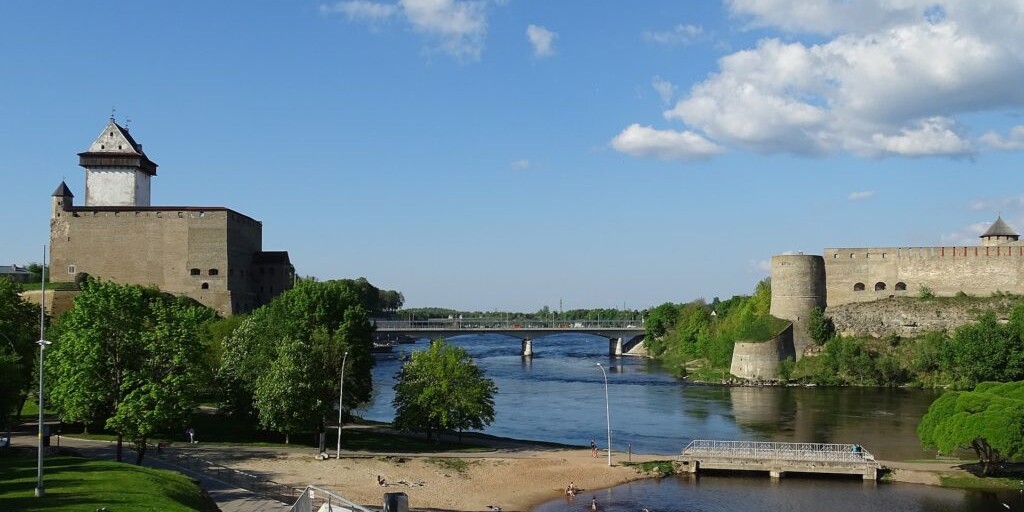
The journey ends in Narva, a city that embodies Estonia's complex history like no other. Here, the European Union and Russia literally stand face to face. Hermann Castle, with its robust white walls and the Long Hermann Tower, stands on the Estonian bank, while Ivangorod Fortress looms menacingly opposite it on the Russian side. The Narva River is the only separation between these two worlds. A walk along the beautifully landscaped river promenade is essential to understanding the dynamics of this border town. But Narva is more than just a border. It is also the city of the Kreenholm Factory, a gigantic red-brick industrial complex that was once the largest textile producer in the Russian Empire. Although the machines are now silent, the enormous buildings on the island in the river exude a raw power found nowhere else.
This route from Tartu to Narva is not a rapid succession of attractions, but a slow voyage of discovery. It is a journey that invites you to pause and reflect on the layered nature of culture and the indomitability of nature. You arrive not only at a geographical boundary, but also with a deeper understanding of a country that has always situated at the crossroads of East and West.
 Links
Links  Usage
Usage Want to download this route?
You can download the route for free without MyRoute-app account. To do so, open the route and click 'save as'. Want to edit this route?
No problem, start by opening the route. Follow the tutorial and create your personal MyRoute-app account. After registration, your trial starts automatically.  Disclaimer
Use of this GPS route is at your own expense and risk. The route has been carefully composed and checked by a MyRoute-app accredited RouteXpert for use on TomTom, Garmin and MyRoute-app Navigation.
Changes may nevertheless have occurred due to changed circumstances, road diversions or seasonal closures. We therefore recommend checking each route before use.
Preferably use the route track in your navigation system. More information about the use of MyRoute-app can be found on the website under 'Community' or 'Academy'.
Changes may nevertheless have occurred due to changed circumstances, road diversions or seasonal closures. We therefore recommend checking each route before use.
Preferably use the route track in your navigation system. More information about the use of MyRoute-app can be found on the website under 'Community' or 'Academy'.
 Nearby routes
Leningrad Oblast
About this region
Leningrad Oblast (Russian: Ленингра́дская о́бласть, tr. Leningradskaya oblast’, IPA: [lʲɪnʲɪnˈgratskəjə ˈobləsʲtʲ]) is a federal subject of Russia (an oblast). It was established on August 1, 1927, although it was not until 1946 that the oblast's borders had been mostly settled in their present position. The oblast was named after the city of Leningrad. In 1991, the city restored its original name, Saint Petersburg, but the oblast retains the name of Leningrad. The capital and largest city is Gatchina.The oblast overlaps the historic region of Ingria and is bordered by Finland (Kymenlaakso and South Karelia) in the northwest and Estonia (Ida-Viru County) in the west, as well as five federal subjects of Russia: the Republic of Karelia in the northeast, Vologda Oblast in the east, Novgorod Oblast in the south, Pskov Oblast in the southwest, and the federal city of Saint Petersburg in the west.
The first governor of Leningrad Oblast was Vadim Gustov (in 1996–1998). The current governor, since 2012, is Aleksandr Drozdenko.
The oblast has an area of 84,500 square kilometers (32,600 sq mi) and a population of 1,716,868 (2010 Census); up from 1,669,205 recorded in the 2002 Census. Leningrad Oblast is highly industrialized.
Read more on Wikipedia
The first governor of Leningrad Oblast was Vadim Gustov (in 1996–1998). The current governor, since 2012, is Aleksandr Drozdenko.
The oblast has an area of 84,500 square kilometers (32,600 sq mi) and a population of 1,716,868 (2010 Census); up from 1,669,205 recorded in the 2002 Census. Leningrad Oblast is highly industrialized.
View region
 Statistics
  1
1Amount of RX reviews (Leningrad Oblast)
 96
96Amount of visitors (Leningrad Oblast)
 0
0Amount of downloads (Leningrad Oblast)
 Route Collections in this region
 Estonia
Discover the Estonia collection: From Medieval Treasures to the Baltic Coast
Estonia is a fascinating blend of Scandinavian pragmatism, Baltic history, and hypermodern innovation. Despite its modest size, the country offers an unprecedented variety for every traveler: from pristine primeval forests to bustling cities where history is tangible on every street corner.
The Historic North Coast
Your journey undoubtedly begins in Tallinn, the capital. The UNESCO-protected medieval old town (Vanalinn) is a labyrinth of cobblestone streets, watchtowers, and pastel-colored houses. But Estonia is more than just the capital. Head east to Rakvere, where an impressive 13th-century castle towers over the city, complete with a huge statue of an aurochs. Even further east lies Narva, a city with a unique atmosphere where Hermann Castle stands directly opposite the Russian Ivangorod Fortress, separated by only a river.
Culture and Enthusiasm in the South
In the south, the atmosphere shifts towards intellectual romanticism. Tartu, the oldest city in the Baltic states and the country's spiritual capital, breathes a vibrant student culture surrounding the prestigious university. Not far from there lies Viljandi, a city known for its annual folk festival and the atmospheric castle ruins overlooking a beautiful lake.
For those wishing to explore Estonia's deeper traditions, Värska is an absolute must. This is the heart of Seto culture, where you can sample local delicacies and experience the healing mud baths. Nearby, you will find the dramatic ruins of Vastseliina Episcopal Castle, once an important pilgrimage site and now one of the most atmospheric places in the country.
Peace and Wellness by the Sea
The Estonian coastline and islands offer a welcome escape. Pärnu is considered the official summer capital; its wide sandy beaches and stately spas have been attracting sun worshippers for decades. For an authentic island experience, take the ferry to Saaremaa, where Kuressaare welcomes you with one of the best-preserved medieval fortresses in the region.
Those who prefer to seek out the lakes will find an oasis of tranquility in Tõrva, surrounded by dense pine forests and crystal-clear swimming water. Whether you come for the silence of nature or the dynamism of the city, Estonia surprises with how effortlessly it connects tradition with the future.
Are you looking for a series of road trips filled with historic cities, picturesque villages, unique spots, and impressive nature? Then you can fill a truly pleasant holiday with this collection of six routes. Moreover, they combine very well, as each drive covers a different part of Estonia.
Estonia is a fascinating blend of Scandinavian pragmatism, Baltic history, and hypermodern innovation. Despite its modest size, the country offers an unprecedented variety for every traveler: from pristine primeval forests to bustling cities where history is tangible on every street corner.
The Historic North Coast
Your journey undoubtedly begins in Tallinn, the capital. The UNESCO-protected medieval old town (Vanalinn) is a labyrinth of cobblestone streets, watchtowers, and pastel-colored houses. But Estonia is more than just the capital. Head east to Rakvere, where an impressive 13th-century castle towers over the city, complete with a huge statue of an aurochs. Even further east lies Narva, a city with a unique atmosphere where Hermann Castle stands directly opposite the Russian Ivangorod Fortress, separated by only a river.
Culture and Enthusiasm in the South
In the south, the atmosphere shifts towards intellectual romanticism. Tartu, the oldest city in the Baltic states and the country's spiritual capital, breathes a vibrant student culture surrounding the prestigious university. Not far from there lies Viljandi, a city known for its annual folk festival and the atmospheric castle ruins overlooking a beautiful lake.
For those wishing to explore Estonia's deeper traditions, Värska is an absolute must. This is the heart of Seto culture, where you can sample local delicacies and experience the healing mud baths. Nearby, you will find the dramatic ruins of Vastseliina Episcopal Castle, once an important pilgrimage site and now one of the most atmospheric places in the country.
Peace and Wellness by the Sea
The Estonian coastline and islands offer a welcome escape. Pärnu is considered the official summer capital; its wide sandy beaches and stately spas have been attracting sun worshippers for decades. For an authentic island experience, take the ferry to Saaremaa, where Kuressaare welcomes you with one of the best-preserved medieval fortresses in the region.
Those who prefer to seek out the lakes will find an oasis of tranquility in Tõrva, surrounded by dense pine forests and crystal-clear swimming water. Whether you come for the silence of nature or the dynamism of the city, Estonia surprises with how effortlessly it connects tradition with the future.
Are you looking for a series of road trips filled with historic cities, picturesque villages, unique spots, and impressive nature? Then you can fill a truly pleasant holiday with this collection of six routes. Moreover, they combine very well, as each drive covers a different part of Estonia.
View Route Collection