
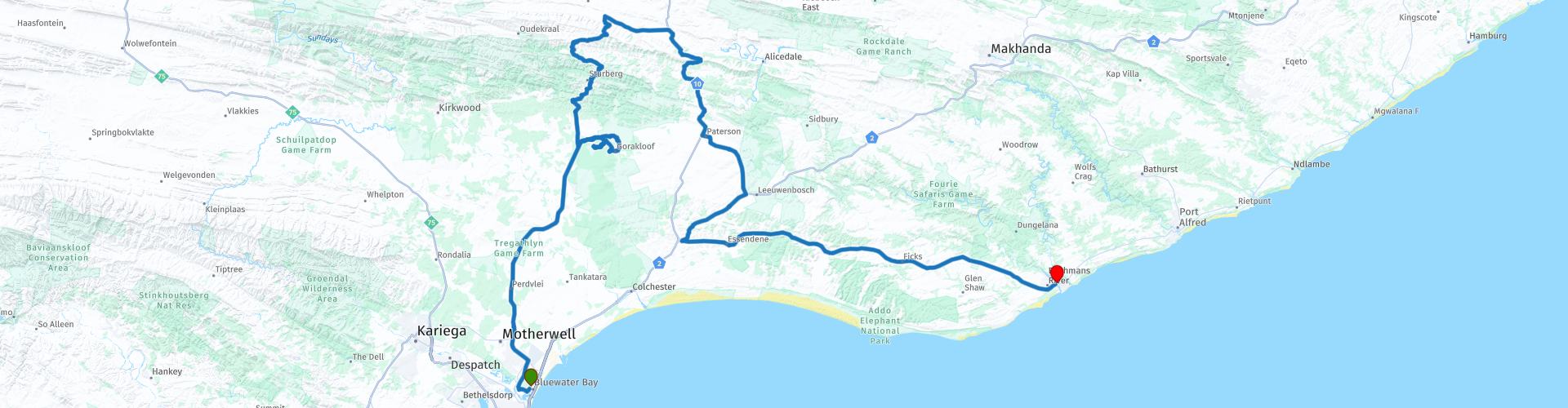
09A Gqeberha Kenton on Sea Adventure

This route was brought to you by:
RouteXpert René Plücken (MRA Master)
Last edit: 16-12-2025
 Route Summary
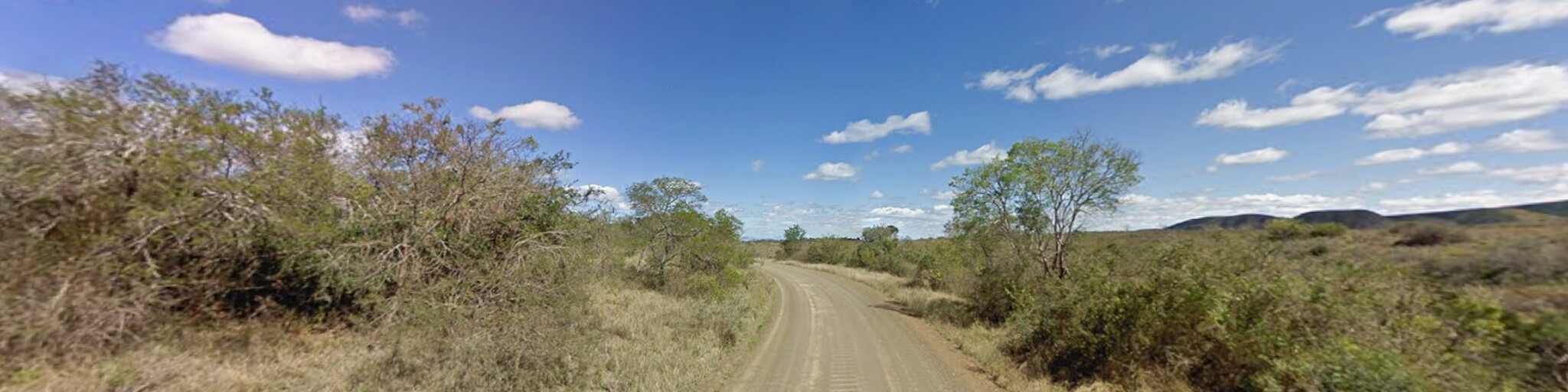
 This is a beautiful drive from Gqeberha (formerly Port Elizabeth) on beautiful roads through the beautiful nature of South Africa, the drive is largely on unpaved roads (about 70 kilometers in total), such as the Doringnek Pass and the Zuurberg Pass, both very challenging passes with many bends.
Some experience driving on unpaved roads is required. For those who prefer not to drive on unpaved roads, there's another route that only uses paved roads. The paved road route (09 Gqeberha Kenton on Sea) is included in the RouteXpert library; the link can be found in this review.
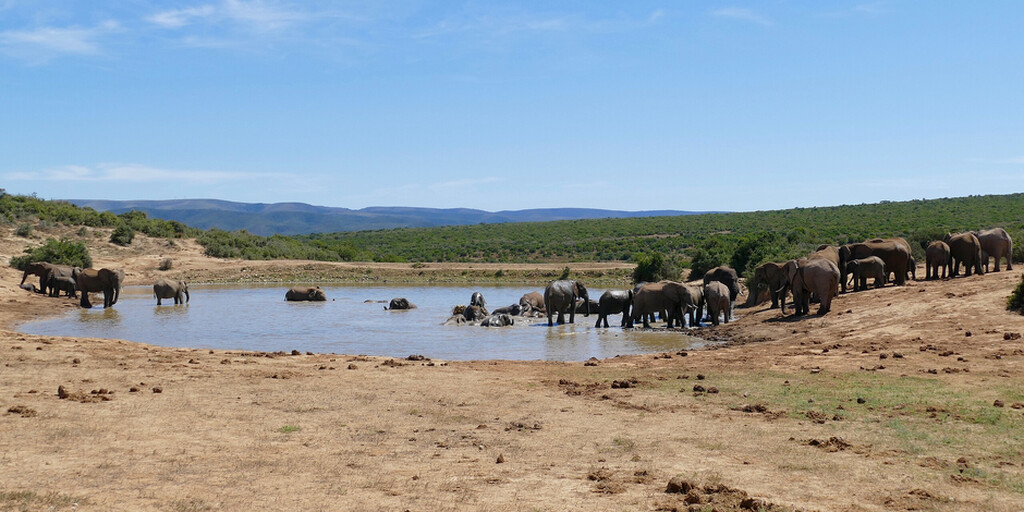
It's possible to visit the beautiful Addo Elephant Nature Park and see the wild animals in their natural habitat during a safari. Please note that motorbikes are not permitted in the park, but you can participate in a 4x4 safari.
Enjoy this beautiful ride which I rate 5 stars because of the beautiful roads, beautiful scenery and wilderness.
 Share this route


Animation

Verdict


Duration
9h 18m

Mode of travel
Car or motorcycle

Distance
276.15 km

Countries

 RouteXpert Review
 Before leaving Gqeberha, we fuel up the bikes and buy some provisions for the journey. Although stops for drinks and food are planned, it's advisable to bring your own provisions. We take the R335 and R342 north; this section of the route is fully and well-paved.
After about 50 kilometers, we approach Addo Elephant National Park, South Africa's third-largest national park. The park is home not only to the traditional "Big Five" (lion, leopard, elephant, rhino, and buffalo), but also to the "Big Seven," including the southern right whale and the great white shark. The park is perfectly situated to showcase its natural wealth: from small, flightless dung beetles to the hundreds of gray elephants it protects, and much more.
There's a wealth of activities in Addo, from private vehicle safaris, guided safaris, and 4x4 tours to short walks and overnight hikes, or simply birdwatching or enjoying a relaxing spa treatment. Addo has it all. Entrance fees vary for locals and foreigners; more information can be found via the link in this review. Unfortunately, you're not allowed to enter the park on motorbikes due to the animals, so you'll have to join an organized 4x4 tour. Car travelers can explore the park in their own vehicle. If you don't want to visit the park, go directly to route point 19.
There are several viewpoints at various waterholes, renowned as excellent spots for observing wildlife, particularly elephants, buffalo, and other animals that come to drink. This makes the park a prime location for photographers and nature lovers seeking authentic African savannah experiences. This itinerary also includes a tour for travelers with a car who wish to explore the park independently.
The journey continues along the R335, which becomes unpaved from the park and features two beautiful, very winding mountain passes. The first is the Doringnek Pass, 9.2 kilometers long and with 63 bends that are sure to captivate. Its summit is 598 meters above sea level, near the mountain village of Zuurberg Mountain Village. This pass has a history dating back to 1850 and connects Somerset East in the north with Addo and Kirkwood in the south.
The road is well-maintained and accessible with any vehicle, but be wary of mountain fog and wildlife. If you plan to drive the entire route, first read the information about the connecting Zuurberg Pass. This is considerably more challenging and requires a vehicle with high ground clearance, preferably an all-terrain motorcycle or a 4x4.
We continue our journey over the Zuurberg Pass (also known as Suurberg Pass), a historic and scenic mountain pass that traverses the Zuurberg mountain range. It's a long, largely unpaved (gravel) road of approximately 27.5 kilometers with no fewer than 158 bends. The northern section of the pass is more rugged and requires a vehicle with high ground clearance, preferably an all-terrain motorcycle or a 4x4.
Be sure to plan a break at Zuurberg Mountain Village. This 162-year-old retreat exudes historic charm and is situated high on the Zuurberg Pass in Addo. This exclusive mountaintop hotel offers guests nature, wildlife, and tranquility in a majestic African setting, nestled amidst 160 hectares of indigenous vegetation and breathtaking views of Addo Elephant National Park. The hotel features cottages, a spa, a restaurant, and a bar. You can also plan an overnight stay to extend your stay and enjoy this beautiful area. Safaris are also available.
At the end of the Zuurberg Pass, we'll make a short visit to the original forge at Ann's Villa, founded in 1855 and now a registered museum. This was an essential stopping point for wagons after crossing the Zuurberg Pass. Almost all the original tools can still be seen here, and extensive tours are offered.
After this visit, we turn right onto the Blue Crane Route, which we follow until we reach the N10. After about five kilometers, the Olifantskop Pass begins, a well-known, beautiful, paved, yet challenging mountain pass on the N10, a major national road that crosses South Africa from the Namibian border in the north to Gqeberha in the south. Remarkably, this is one of only three passes named after elephants; the other two are Olifantspoort near Queenstown and Olifantsnek near Rustenburg.
Although the road is in good condition, Olifantskop is considered one of the most dangerous passes in South Africa. This is due to factors such as extreme weather conditions, falling rocks, wildlife crossings, numerous blind bends, steep inclines, and—last but not least—the large number of heavy trucks that use this route. Therefore, exercise extra caution here.
We're planning a short break in Sunday's River Valley, where you can enjoy coffee and pastries at Coffee & Fudge. If needed, you can also refuel at the adjacent gas station. From Sunday's River Valley, you can choose to take the N10 and the R72 if you want to avoid the unpaved R342. However, we'll be taking the R342 and the R72 to Kenton-on-Sea, the end point of this trip.
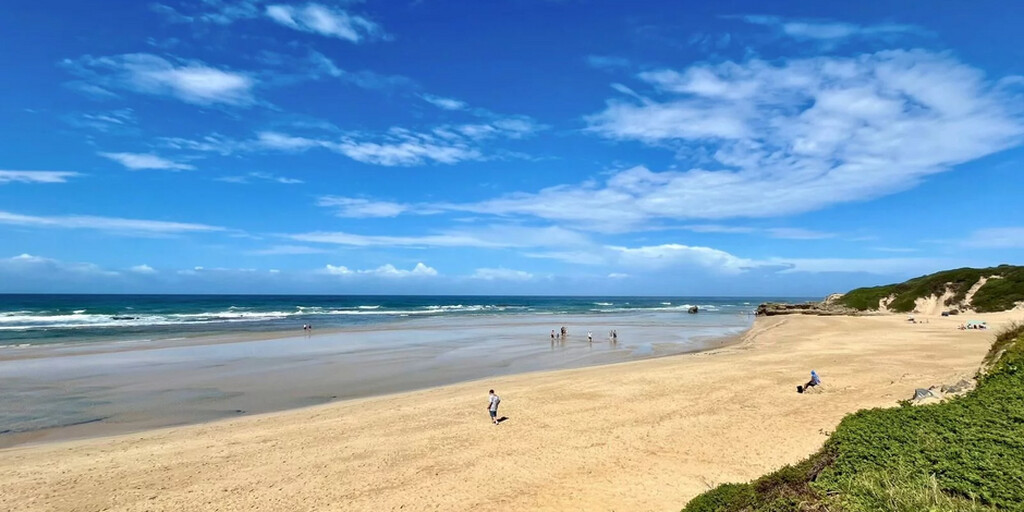
Kenton-on-Sea has several good hotels and guesthouses where you can stay. Unlike many other coastal towns in South Africa, Kenton has managed to avoid overdevelopment. There are no high-rise hotels, no bustling shopping streets, and no crowded beaches. The landscape is rugged and unspoiled. It's peaceful, yet there's plenty to do, without ever feeling commercialized. Anyone looking for a break from city life will find the perfect place to unwind and relax.
 Links
Links  Usage
Usage Want to download this route?
You can download the route for free without MyRoute-app account. To do so, open the route and click 'save as'. Want to edit this route?
No problem, start by opening the route. Follow the tutorial and create your personal MyRoute-app account. After registration, your trial starts automatically.  Disclaimer
Use of this GPS route is at your own expense and risk. The route has been carefully composed and checked by a MyRoute-app accredited RouteXpert for use on TomTom, Garmin and MyRoute-app Navigation.
Changes may nevertheless have occurred due to changed circumstances, road diversions or seasonal closures. We therefore recommend checking each route before use.
Preferably use the route track in your navigation system. More information about the use of MyRoute-app can be found on the website under 'Community' or 'Academy'.
Changes may nevertheless have occurred due to changed circumstances, road diversions or seasonal closures. We therefore recommend checking each route before use.
Preferably use the route track in your navigation system. More information about the use of MyRoute-app can be found on the website under 'Community' or 'Academy'.
 Nearby routes
South Africa
About this region
South Africa, officially the Republic of South Africa (RSA), is the southernmost country in Africa. Its nine provinces are bounded to the south by 2,798 kilometres (1,739 miles) of coastline that stretches along the South Atlantic and Indian Ocean; to the north by the neighbouring countries of Namibia, Botswana, and Zimbabwe; to the east and northeast by Mozambique and Eswatini; and it encloses Lesotho. Covering an area of 1,221,037 square kilometres (471,445 square miles), the country has over 62 million people. Pretoria is the administrative capital, while Cape Town, as the seat of Parliament, is the legislative capital. Bloemfontein has traditionally been regarded as the judicial capital. The largest and most populous city is Johannesburg, followed by Cape Town and the busiest port city in sub-Saharan Africa, Durban.
Archaeological findings suggest that various hominid species existed in South Africa about 2.5 million years ago, and modern humans inhabited the region over 100,000 years ago. The first known people were the indigenous Khoisan, and Bantu-speaking peoples who expanded from West and Central Africa later settled in the region 2,000 to 1,000 years ago. In the north, the Kingdom of Mapungubwe formed in the 13th century. In 1652, the Dutch established the first European settlement at Table Bay, and in 1795 and 1806, the British occupied it. The Mfecane, a period of significant upheaval, led to the formation of various African kingdoms, including the Zulu Kingdom. The region was further colonised, and diamonds and gold were discovered, bringing a shift towards industrialisation and urbanisation. The Union of South Africa was created in 1910 out of the former Cape, Natal, Transvaal, and Orange River colonies, becoming a republic in 1961. Though a system of non-racial franchise had existed in the Cape, it was gradually eroded, and the vast majority of Black South Africans were not enfranchised until 1994.
The National Party imposed apartheid in 1948, institutionalising previous racial segregation. After a largely non-violent struggle by the African National Congress and other anti-apartheid activists both inside and outside the country, the repeal of discriminatory laws began in the mid-1980s. Universal elections took place in 1994, following which all racial groups have held political representation in the country's liberal democracy, which comprises a parliamentary republic and nine provinces.
South Africa is a multi-ethnic society encompassing a wide variety of cultures, languages, and religions; it is often referred to as the "rainbow nation" to describe the country's multicultural diversity, especially in the wake of apartheid. As a middle power in international affairs, South Africa maintains a significant regional influence. In addition to that, the country is a member of BRICS+, the African Union, SADC, SACU, the Commonwealth of Nations, and the G20. A developing, newly industrialised country, South Africa has the largest economy in Africa by nominal GDP. It is tied with Ethiopia for the most UNESCO World Heritage Sites in Africa, and is a biodiversity hotspot with unique biomes, plant, and animal life. Since the end of apartheid, government accountability and quality of life have substantially improved. However, crime, poverty, and inequality remain widespread. Having the highest Gini coefficient of 0.63, South Africa is considered one of the most unequal countries in the world, if not the most unequal.
Read more on Wikipedia
Archaeological findings suggest that various hominid species existed in South Africa about 2.5 million years ago, and modern humans inhabited the region over 100,000 years ago. The first known people were the indigenous Khoisan, and Bantu-speaking peoples who expanded from West and Central Africa later settled in the region 2,000 to 1,000 years ago. In the north, the Kingdom of Mapungubwe formed in the 13th century. In 1652, the Dutch established the first European settlement at Table Bay, and in 1795 and 1806, the British occupied it. The Mfecane, a period of significant upheaval, led to the formation of various African kingdoms, including the Zulu Kingdom. The region was further colonised, and diamonds and gold were discovered, bringing a shift towards industrialisation and urbanisation. The Union of South Africa was created in 1910 out of the former Cape, Natal, Transvaal, and Orange River colonies, becoming a republic in 1961. Though a system of non-racial franchise had existed in the Cape, it was gradually eroded, and the vast majority of Black South Africans were not enfranchised until 1994.
The National Party imposed apartheid in 1948, institutionalising previous racial segregation. After a largely non-violent struggle by the African National Congress and other anti-apartheid activists both inside and outside the country, the repeal of discriminatory laws began in the mid-1980s. Universal elections took place in 1994, following which all racial groups have held political representation in the country's liberal democracy, which comprises a parliamentary republic and nine provinces.
South Africa is a multi-ethnic society encompassing a wide variety of cultures, languages, and religions; it is often referred to as the "rainbow nation" to describe the country's multicultural diversity, especially in the wake of apartheid. As a middle power in international affairs, South Africa maintains a significant regional influence. In addition to that, the country is a member of BRICS+, the African Union, SADC, SACU, the Commonwealth of Nations, and the G20. A developing, newly industrialised country, South Africa has the largest economy in Africa by nominal GDP. It is tied with Ethiopia for the most UNESCO World Heritage Sites in Africa, and is a biodiversity hotspot with unique biomes, plant, and animal life. Since the end of apartheid, government accountability and quality of life have substantially improved. However, crime, poverty, and inequality remain widespread. Having the highest Gini coefficient of 0.63, South Africa is considered one of the most unequal countries in the world, if not the most unequal.
View region
 Statistics
  22
22Amount of RX reviews (South Africa)
 1192
1192Amount of visitors (South Africa)
 12
12Amount of downloads (South Africa)