
Primorska from Koper

This route was brought to you by:
RouteXpert Jan Koelstra - Senior Rx
Last edit: 01-09-2025
 Route Summary
 Slovenia's short coastline is less than 50 kilometers long. Natural sandy beaches are rare; most are man-made and/or pebble, yet it is being discovered and visited by a growing number of tourists for a relaxing sun holiday. Distinctive Italian influences define the colors and architecture of the historic coastal towns of Portorož, Piran, Isola, and Koper.
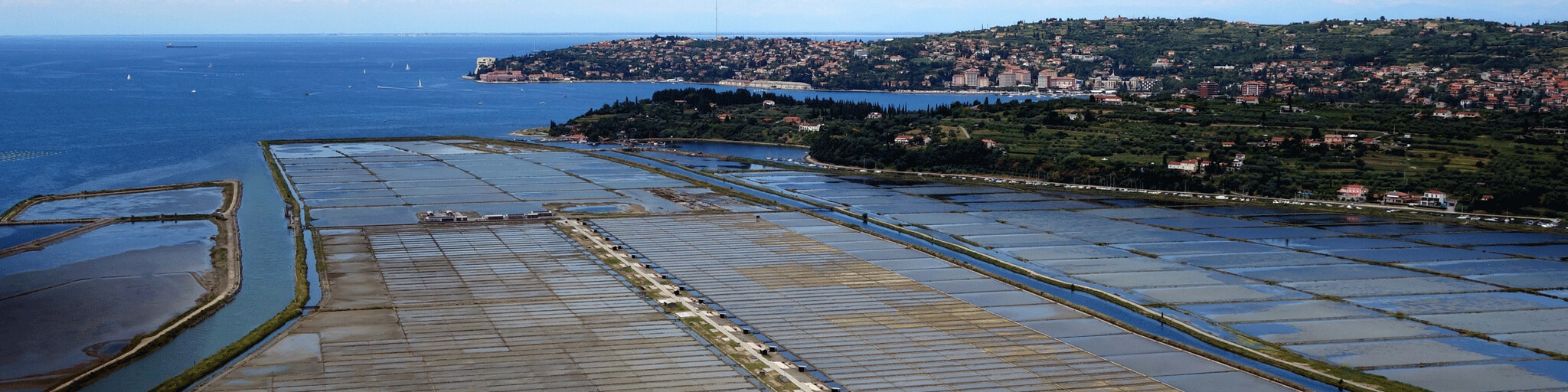
Here also lies the Strunjan Nature Reserve, a protected area with the remarkable Moon Bay, nestled near an 80-meter-high cliff. Here you'll find the northernmost and smallest salt pan in the Mediterranean, where salt has been produced traditionally for over 700 years. A little further on, near the Croatian border, lie the more extensive Sečovlje salt pans, waiting for sunshine and visitors.
In Hrastovlje, you'll find a 12th-century Romanesque church with a high rampart and beautiful frescoes inside. Gradually, the landscape transforms into a karst region: limestone erosion has created numerous gorges and caves. The Škocjan Caves are among the most famous sights in Slovenia. This UNESCO-listed cave system is one of the largest underground gorges in the world. It is of exceptional beauty and boasts a unique and valuable ecosystem. Towards the Italian border, you'll find Lipica, the home of the centuries-old stud farm of the world-famous Lipizzaner horses.
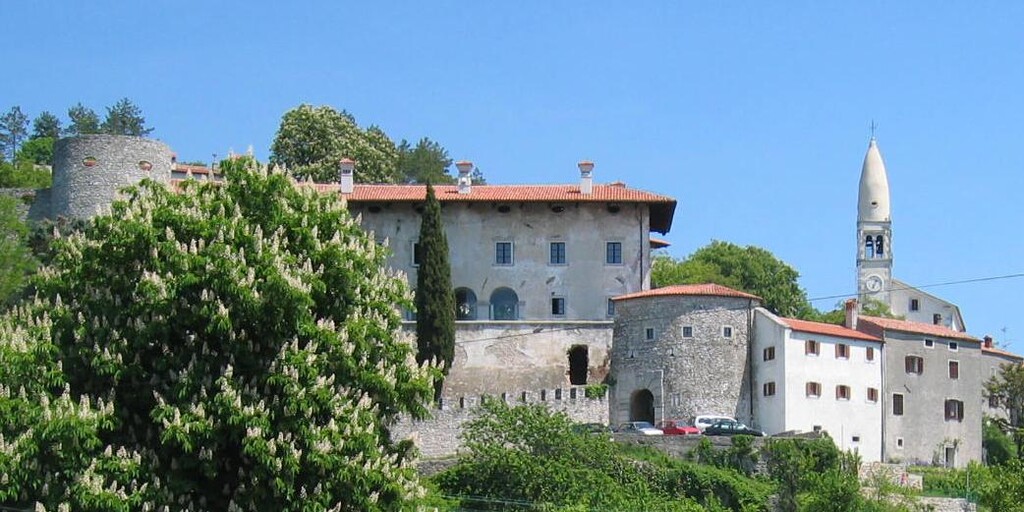
Via the beautiful fortified town of Štanjel, you then arrive in the Brda region, located approximately at the latitude of Trieste. With its rolling hills, it is one of Slovenia's most unspoiled wine regions and is renowned for its "sweet life," not only for its cherries and gastronomy, but especially for its excellent wines. For this reason, the region is sometimes called the Tuscany of Slovenia.
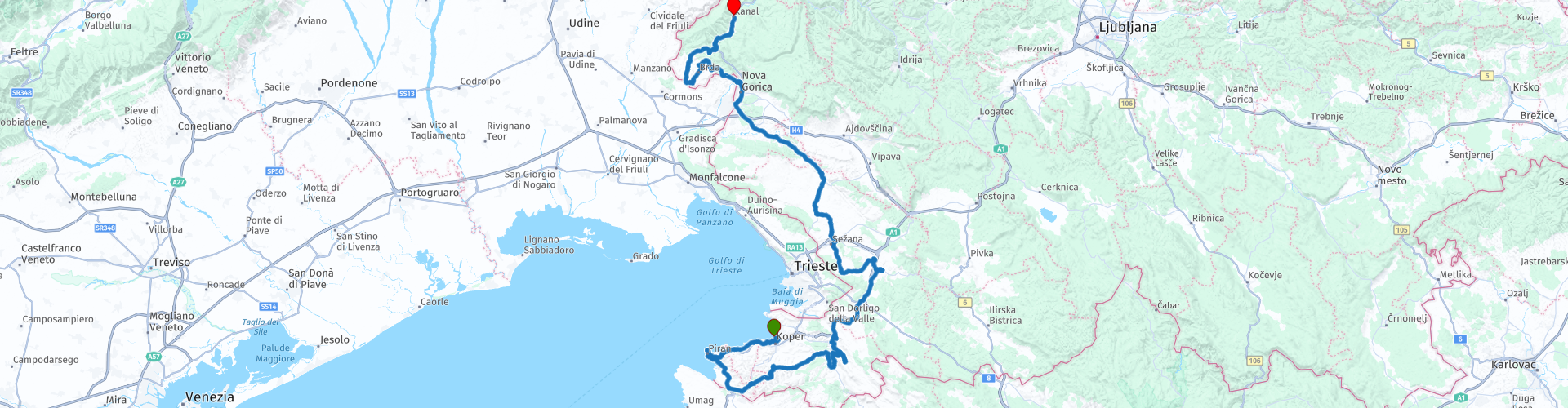
This trip through western Slovenia begins in the coastal town of Koper, follows the coast to the Croatian border, and then gradually turns north to the Italian border. You'll visit the Škocjan Caves, drive through the Brda Valley wine region, and follow the Soča River, ending in Kanal ob Soči.
This route receives 5 stars because of the great variety of nature and culture, the views, the beautiful roads, the visits and the wonderful after-work relaxation.
 Share this route


Animation

Verdict


Duration
9h 13m

Mode of travel
Car or motorcycle

Distance
199.58 km

Countries


 RouteXpert Review
 Fishing and tourism in the coastal area, with the well-known coastal towns of Koper, Izola, and Piran, are Primorska's main sources of income. Winemaking is renowned around the Brda Valley. Agriculture and livestock farming also play an important role, with the perfect climate for growing crops and raising livestock.
The karst underworld is one of the most extraordinary phenomena that nature has to offer: from gorges with wild rivers to stalactites in all sorts of bizarre shapes.
In the low mountain range around the Soča River, nature is at its finest, with beautiful views and outdoor activities: on the river and in the rugged mountains. People are drawn here by the diverse natural beauty and rich cultural heritage.
Koper is a town with a rich history and is considered one of the oldest Slovenian towns: it's the largest city in Slovenian Istria on the coast, a port, a university town, a bilingual city, and so on. Many sights await you, such as the cathedral, the Praetorian Palace, the Koper Regional Museum, and the Carpaccio House. Climb the bell tower and enjoy the view.
In Izola, you can experience the atmosphere of an old fishing village by wandering through the narrow streets, visiting the Izola Museum, and enjoying the proximity of beaches like Svetilnik Beach.
Strunjan is known for its oyster farms and salt pans. These are the northernmost and smallest salt pans in the Mediterranean, where salt has been produced traditionally for over 700 years. Strunjan Landscape Park is one of Slovenia's smallest parks, but thanks to its diversity, unmatched by few other parks in the country, it offers a complete experience for both day and multi-day visitors.
Piran is an ancient Mediterranean city. Its old town boasts a rich history, reflected in its narrow alleyways, compact houses like the Venetian House, medieval architecture, and an open-air museum.
The city is virtually car-free; upon arrival, there's a large garage where all vehicles must be parked. Immediately upon arrival, you'll find yourself in the central square, Tartinijev Trg, named after the composer Giuseppe Tartini. Located in the heart of Piran, this square also houses the Town Hall, where a Venetian winged lion proudly overlooks the square. As you continue your pleasant stroll along the waterfront promenade of Piran, you'll eventually reach the tip of the Piran Peninsula. Here stands an extremely old church, the oldest part of which dates back to the 13th century. You'll also find Piran's old lighthouse, Piranski Svetilnik, here. Continue along the waterfront on the other side of the peninsula, and shortly after, you'll come across a small road that leads to Piran's main church: St. George's Cathedral. From here, you'll have a panoramic view of the city with its many pastel-colored buildings and a beautiful sea view. If you continue a bit further, you'll have the opportunity to visit the old city walls. You can also choose to walk along the Piran city walls for a fee, where another stunning view of the Adriatic coast awaits.
A particularly interesting excursion is a visit to the salt pans south of Piran: Sečovlje Salina Nature Park. Salt has been extracted here since 804 using traditional methods, by drying seawater. Most of the salt sold in Slovenia comes from here! It's also a unique landscape to explore, offering culture and nature all rolled into one!
The church (Cerkev sv. Trojice) is a historic building in Hrastovlje, a peaceful village in southwestern Slovenia. The origins of this remarkable site have not yet been determined. The building is either a Romanesque church from the 12th century or an Istrian variant of the early Venetian Renaissance style from the 15th century. Either way, it is built on a bare rock, primarily of stone, which is very typical of Slovenia's coastal region. Since the stones were never completely covered with plaster, visitors can see how the church was constructed. It is noticeable that the top of the church tower was rebuilt at some point in history, but the reason remains unclear. The church has only two windows. In summer, the space with the smaller window was protected from the sun, while in winter it was protected from the strong bora winds. The church's interior was decorated with Gothic frescoes by Johannes de Castua, dating from the late 15th century, the most famous of which is The Dance of Death, or "Danse Macabre," which was only discovered in 1949. The strikingly high stone defensive wall gives the whole a robust appearance.
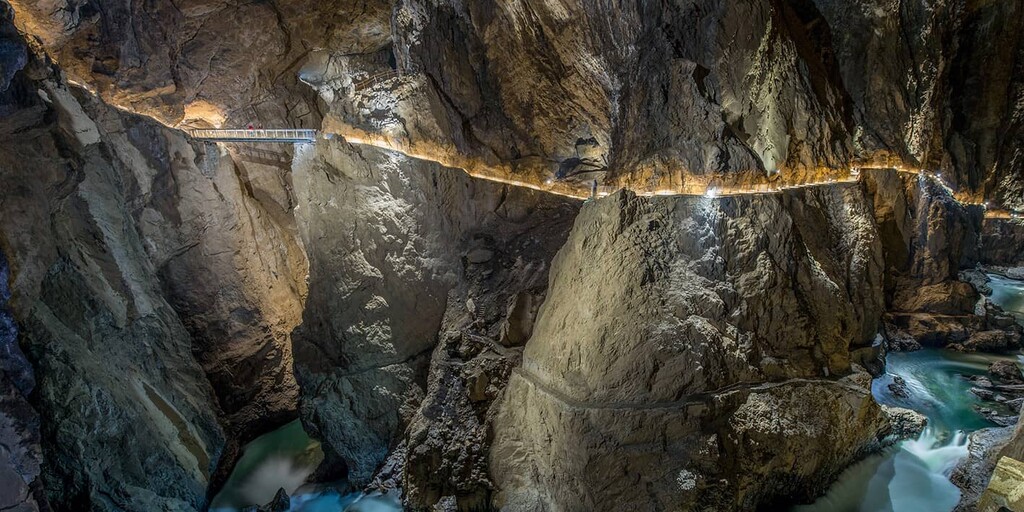
UNESCO has declared the Škocjan Caves (škocjanske jame) a World Heritage Site. The mountain range contains over six thousand caves, of which only about a hundred have been explored to date. It comprises a 3.5 km long, up to 60 m wide, and over 140 m deep gorge that extends into caves in some places.
Before you admire the Risnik sinkhole, you'll have lunch in Divača, a small but lively town, and above all, a major hub in the railway network. The station is therefore the lively center of town, and you'll find several lunch spots there.
The picturesque Risnik sinkhole is located less than 500 meters south of the train station in Divača. It was formed by the collapse of the ceiling of the former cave hall. The formation is connected to the former underground flow of the Reka River, which changed direction and now flows much deeper. The average diameter of the sinkhole is 220 meters and its average depth is 72 meters. The sinkhole's floor is relatively flat, with debris rising towards the perimeter, which merges into high cliffs at the top. The rock's perimeter is interrupted only in one place, where you can descend along the scree slope to the sinkhole's bottom. Many birds find shelter in the rock walls, and specific vegetation thrives in the Risnik valley due to the temperature inversion.
Lipica is a mecca for horse lovers because of its Lipizzan stud farm. Lanes lined with gnarled, centuries-old linden trees lead to this romantic spot. Here you'll see Slovenia's showpiece horses! The Lipizzan breed was created in 1580 by crossing Andalusian stallions with native mares. This resulted in an obedient, robust, intelligent, and elegant breed. Lipizzaners are born dark-skinned but turn snow-white over time. After years of training, they can pirouette, prance elegantly, and waltz to music. You can admire their skills during a demonstration by the classical riding school. You can also see them up close during a stud farm tour: the animals stand in immaculately kept stalls, are groomed, and gaze curiously at visitors with their expressive eyes. The Lipikum Museum, which is included in the entrance fee, is somewhat dry and primarily provides information about the development of the stud farm and the Lipizzaners.
The Solkan Bridge is a 219.7-meter-long arch bridge over the Soča River near Solkan. With an arch span of 85 meters (279 feet), it is the world's longest stone arch railway bridge. It holds this record because later construction technology used reinforced concrete for bridge construction. It was built between 1900 and 1906. During World War I, the bridge was destroyed by the Austrians as they left Solkan, preventing their enemy from using it. During World War II, the bridge was repeatedly damaged by bombing, but was always repaired by the Germans within a few days.
You're now entering the Brda Valley wine region, affectionately known as the Tuscany of Slovenia. Vineyards dot the rolling hills. From the Gonjače observation tower, you can see the surrounding area for a good impression. But even better: you can sample the final product in the medieval village of Šmartno, recognizable by its five striking towers and old city walls dating back to the 16th and 17th centuries. This is one of the most beautiful and best-preserved historic villages in Slovenia. Stroll through the charming town center, visit one of the many wine tastings, and enjoy the sunshine on one of the inviting terraces. Or walk along the old city walls, from where you'll have a magnificent view of the surroundings. Of course, this isn't the only wine village in this region, so you'll want to take a short detour through the wine region. For example, you'll pass Vipolže, with its beautiful Renaissance villa, and Dobrovo Castle, built in the Renaissance style and dating back to the 17th century. Be sure to take a look inside and admire the centuries-old Knights' Hall and the magnificent collection of paintings by famous Slovenian artists. In any case, there will be ample opportunity to sample the wines of this wine region.
And then the destination approaches. Driving along the emerald Soča River, Kanal ob Soči lies on the other side of the bridge. The current bridge was built after the First World War. It is approximately 17 meters high and hosts annual diving events in mid-August. There are plans to build a new bridge to reduce traffic through the city center.
The village of Kanal lives up to its name: it's situated right on the Soča River, and the view of the village as you approach is truly magnificent. There's not much to do in Kanal, but the beautiful colors and charming streets are worth a stop. In the village, you'll find the Neptune Fountain from 1815, next to a charming parish church.
 Links
Links  Usage
Usage Want to download this route?
You can download the route for free without MyRoute-app account. To do so, open the route and click 'save as'. Want to edit this route?
No problem, start by opening the route. Follow the tutorial and create your personal MyRoute-app account. After registration, your trial starts automatically.  Disclaimer
Use of this GPS route is at your own expense and risk. The route has been carefully composed and checked by a MyRoute-app accredited RouteXpert for use on TomTom, Garmin and MyRoute-app Navigation.
Changes may nevertheless have occurred due to changed circumstances, road diversions or seasonal closures. We therefore recommend checking each route before use.
Preferably use the route track in your navigation system. More information about the use of MyRoute-app can be found on the website under 'Community' or 'Academy'.
Changes may nevertheless have occurred due to changed circumstances, road diversions or seasonal closures. We therefore recommend checking each route before use.
Preferably use the route track in your navigation system. More information about the use of MyRoute-app can be found on the website under 'Community' or 'Academy'.
 Nearby routes
Obalnokraka
About this region
View region
 Statistics
  6
6Amount of RX reviews (Obalnokraka )
 110
110Amount of visitors (Obalnokraka )
 132
132Amount of downloads (Obalnokraka )
 Route Collections in this region
 Primorska
Primorska is a historic region in western Slovenia, bordering Italy near Trieste. The region lies between the Julian Alps, the Adriatic Sea, and Istria. It is known for its beautiful coastline, impressive Julian Alps, and unique Karst Plateau.
Fishing and tourism in the coastal area, with the well-known coastal towns of Koper, Izola, and Piran, are Primorska's main sources of income. Winemaking is renowned around the Brda Valley. Agriculture and livestock farming also play an important role, with the perfect climate for growing crops and raising livestock.
The karst underworld is among the most extraordinary phenomena that nature has to offer: from gorges with raging rivers to stalactites in all sorts of bizarre shapes, with the highlights being the famous Postojna Caves and the lesser-known, but breathtakingly beautiful Škocjan Caves.
In the mountains surrounding the Soca River, nature is at its finest, with beautiful views and outdoor activities on the river and in the rugged mountains. People are drawn here by the diverse natural beauty and rich cultural heritage. Because the mountainous border region is difficult to access, forts and castles were built in the past for protection and security. You'll still find many traces of the fighting here, such as the Alpine Wall, the Rapallo border, and the Isonzo front from World War I, especially around Kobarid.
In this region, four routes have been established that visit the various areas of Primorska. Because there is so much variety in this region of Slovenia, the routes each have their own unique accent.
Fishing and tourism in the coastal area, with the well-known coastal towns of Koper, Izola, and Piran, are Primorska's main sources of income. Winemaking is renowned around the Brda Valley. Agriculture and livestock farming also play an important role, with the perfect climate for growing crops and raising livestock.
The karst underworld is among the most extraordinary phenomena that nature has to offer: from gorges with raging rivers to stalactites in all sorts of bizarre shapes, with the highlights being the famous Postojna Caves and the lesser-known, but breathtakingly beautiful Škocjan Caves.
In the mountains surrounding the Soca River, nature is at its finest, with beautiful views and outdoor activities on the river and in the rugged mountains. People are drawn here by the diverse natural beauty and rich cultural heritage. Because the mountainous border region is difficult to access, forts and castles were built in the past for protection and security. You'll still find many traces of the fighting here, such as the Alpine Wall, the Rapallo border, and the Isonzo front from World War I, especially around Kobarid.
In this region, four routes have been established that visit the various areas of Primorska. Because there is so much variety in this region of Slovenia, the routes each have their own unique accent.
View Route Collection