
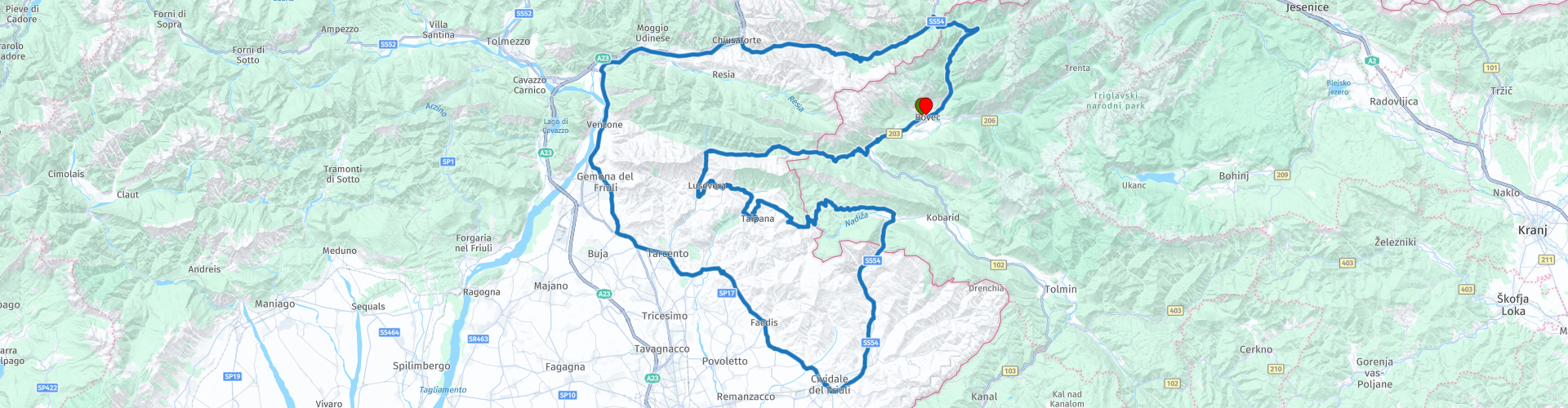
Primorska from Bovec

This route was brought to you by:
RouteXpert Jan Koelstra - Senior Rx
Last edit: 04-10-2025
 Route Summary
 The Soča Valley is a beautiful area dominated by the Soča River, from which the region takes its name. With its crystal-clear turquoise waters, the Soča River and the mountainous landscape enchant all who visit. The Soča River flows from northwestern Slovenia to the casino town of Nova Gorica in the west.
Bovec, where this cross-border tour begins, is a great base for exploring the region, as there's so much to see and do. And not just in Slovenia; across the border in Italy's Friuli region, you'll also be amazed by the sights. The most impressive sights are the rugged mountains, the colorful river valleys, the traditional villages, castles, and the wine—worth 5 stars.
 Share this route


Animation

Verdict


Duration
7h 24m

Mode of travel
Car or motorcycle

Distance
212.37 km

Countries


 RouteXpert Review
 Fishing and tourism in the coastal area, with the well-known coastal towns of Koper, Izola, and Piran, are Primorska's main sources of income. Winemaking is renowned around the Brda Valley. Agriculture and livestock farming also play an important role, with the perfect climate for growing crops and raising livestock.
The karst underworld is one of the most extraordinary phenomena that nature has to offer: from gorges with wild rivers to stalactites in all sorts of bizarre shapes.
In the mountains surrounding the Soca River, nature is at its finest, with beautiful views and outdoor activities: on the river and in the rugged mountains. People are drawn here by the diverse natural beauty and rich cultural heritage. In the northwest, many traces of the Isonzo Front from World War I are also visible.
This circular route starts and ends in Bovec. Because Bovec is close to Italy and there are limited roads through the mountains, the route largely runs through the Italian Friuli region.
Bovec
It's a small town with a charming center. Stroll through the narrow streets, dotted with souvenir shops and cafes. After an active day, relax at one of the many terraces with a beer or a glass of wine. A great thought after the ride. First, fill up the tank, and then head to our first attraction.
Slap Boka
This impressive waterfall, located in the beautiful Soča Valley, cascades from a great height and flows into the turquoise Soča River. Slap Boka is the highest waterfall in Slovenia, with a total height of 136 meters. The first section drops 106 meters, followed by a second drop of about 30 meters. The waterfall grows higher every year as the cascading water erodes the ground. What makes Slap Boka truly unique is that the water cascades from an underground cave. This phenomenon is rare in Slovenia and adds to the waterfall's mystique. You can reach the waterfall via two different hiking trails. Both trails lead to a viewpoint offering a magnificent view of the waterfall. The waterfall is at its most beautiful from April to June.
After the waterfall, admire the beauty of the Učja Valley. Many water sports are available here, such as river walking and canyoning. There's even a zipline, but you'll drive out of the valley towards Italy. After crossing the border, near Uccea, you'll follow a mountain road with beautiful views over Friuli; this rugged and unspoiled area is part of the Julian Prealps Nature Park and is a paradise for mountaineers.
Lusevera
Its strategic yet isolated location made Lusevera a key hub for contact with other communities, especially when the Venetian government began deforesting and bureaucratically managing the area. Only after the First World War did Lusevera's inhabitants begin to feel more connected to the outside world, leading to emigration to more prosperous areas. The diverse morphology of the area, surrounded by the Musi Mountains, is characterized by different ecological systems. In the south lie thermophilic forests typical of the Mediterranean, while in the north, ash and chestnut trees thrive in the cooler soil. The Grotte di Villanova, including the famous Grotta Nuova, discovered in 1925 and open to the public, are a popular local attraction in the Julian Prealps Nature Park.
Breginj
After crossing the Slovenian border you end up in the authentic Breginj.
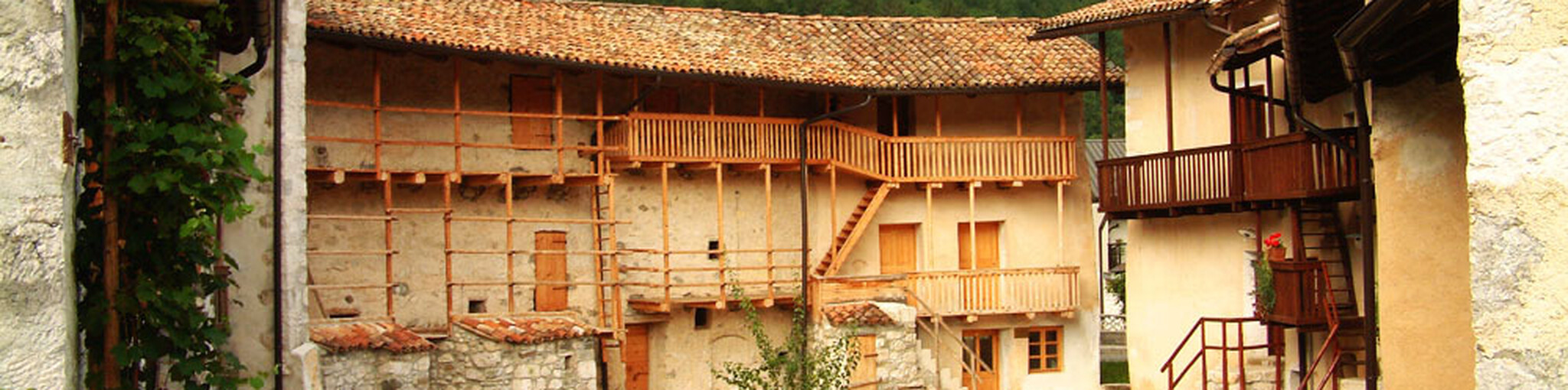
It is a picturesque village in Primorska, known for its scenic beauty and cultural heritage, including the Breginj Museum, which showcases the history and traditional lifestyle of the area. Before the great earthquake of 1976, Breginj was a precious, living monument to Slovenia's unique architecture. The circular streets and stone houses with their covered galleries (known as "ganki"), connected to their stables and barns, stood in oval clusters. Now, the only remnant of the original layout is the old village center with its museum and the Church of St. Nicholas and rectory; these are classified as national cultural monuments.
After crossing the Italian border again, you enter the lower Friuli region. On your way to Cividale, you'll pass the impressive Castello di Ahrensperg, now a hotel. Originally a historic castle, it's known for its architectural beauty and rich history, offering visitors a glimpse into the past. Set in a picturesque landscape, it offers impressive views.
Cividale del Friuli
The town is not large. The main square bears the name of Paolo the Diaconate. Together with the central shopping street, Corso G. Mazzini, the Duomo, and the Devil's Bridge, this forms the city center. The National Archaeological Museum, with its numerous finds from both the Roman and Lombard periods, is highly recommended. Around Cividale, archaeologists have discovered several Lombard cemeteries, and all the artifacts (weapons, crosses, jewelry, combs, etc.) found in these graves are displayed there. In terms of the number of Lombard finds, it is the largest and most important museum in all of Italy! A visit to Cividale is not complete without a visit to the Tempietto Longobardo. This small church, dating from the late 8th century, has miraculously survived over 1,200 years of history. This is because it is part of an ancient monastery called Santa Maria in Valle. This monastery, built along the banks of the Natisone River, was still in use until the beginning of the last century. The nuns held their masses and services in this well-preserved church until the more recent church of San Giovanni was built next to it (which is now no longer used for church services but for exhibitions and concerts).
Castello Savorgnan
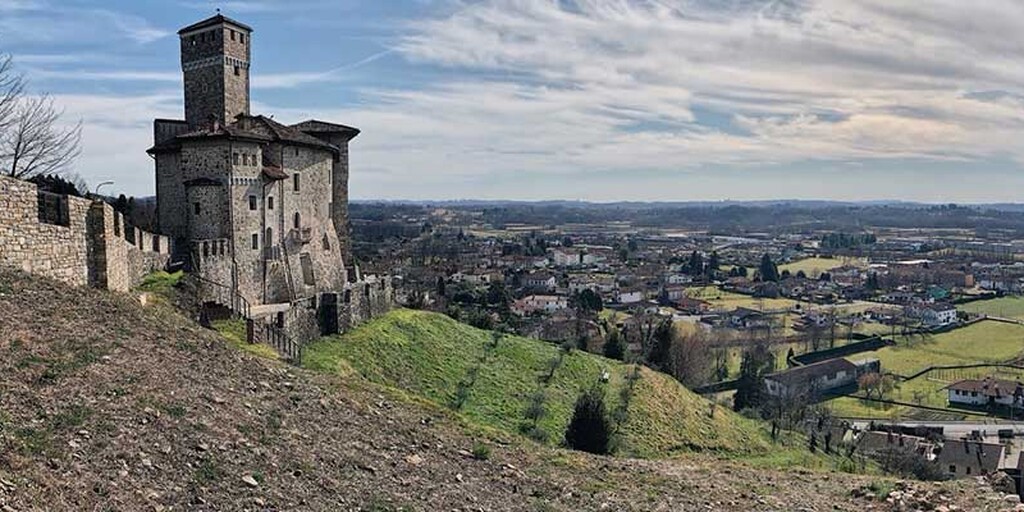
Situated on a hill in the town of Artegna, Castello Savorgnan di Artegna was originally built by the influential Savorgnan family, important figures in Friulian history. The castle was a symbol of their power and served as a defense for a long time. Visitors to Castello Savorgnan can explore the impressive stone walls, towers, and fortifications that highlight medieval military architecture. The interior has been partially preserved, with exhibitions on the site's history and archaeological finds that offer insights into castle life at the time.
Gemona
One of Gemona's top attractions is the Duomo di Santa Maria Assunta, a cathedral dating back to the 14th century and known for its beautiful architecture and impressive frescoes. The nearby Castello di Gemona also offers a fascinating insight into the region's history, despite being largely in ruins.
Venzone (lunch)
These two villages were important in the Middle Ages for pilgrims on their way to Rome and merchants who paid tolls to cross the Tagliamento River. They offered shelter and formed part of the "medieval highway" that ran through the region. Their trading role disappeared when Udine was granted market rights in the 13th century. The 6.5 magnitude earthquake of May 6, 1976, destroyed almost all the buildings and claimed nearly 1,000 lives. This tragedy, however, put the region on the map. Thanks to the "Friuli Model," reconstruction was swift, with historic buildings meticulously restored stone by stone. Today, Venzone has been beautifully rebuilt, resembling a medieval film set. The Tiere Motus Museum commemorates the dramatic events of 1976 with videos and photos of the reconstruction. In the San Michele Chapel, admire the famous mummies preserved in the cemetery by a parasitic fungus.
Along the lake of Predil
The water of Lake Predil is clear and transparent, a greenish-blue color, but it is very cold, a fact that doesn't prevent the intrepid from taking a refreshing dip. A characteristic islet rises in the middle of the water, creating an enchanted landscape.
Predil Pass
The Isonzo Battle of World War I took place at the Predil Pass. Several fortifications along the pass date from this period. Several forts remain along the lake on the Italian side, as do those on the other side of the pass on the Slovenian side.
Mangart Mountains
Still have some time left? The Mangart Road takes you along winding roads, rock tunnels, and countless hairpin bends to an altitude of 2,000 meters. You can choose to hike a bit further. Whatever you choose, you'll be rewarded with breathtaking views of the landscape.
Log pod Mangartom
Here is a soldiers' cemetery from the First World War where several thousand Hungarian-German soldiers are buried who fell in a snowstorm during the Battle of Bovec in October 1914.
Fort Kluse and Fort Hermann
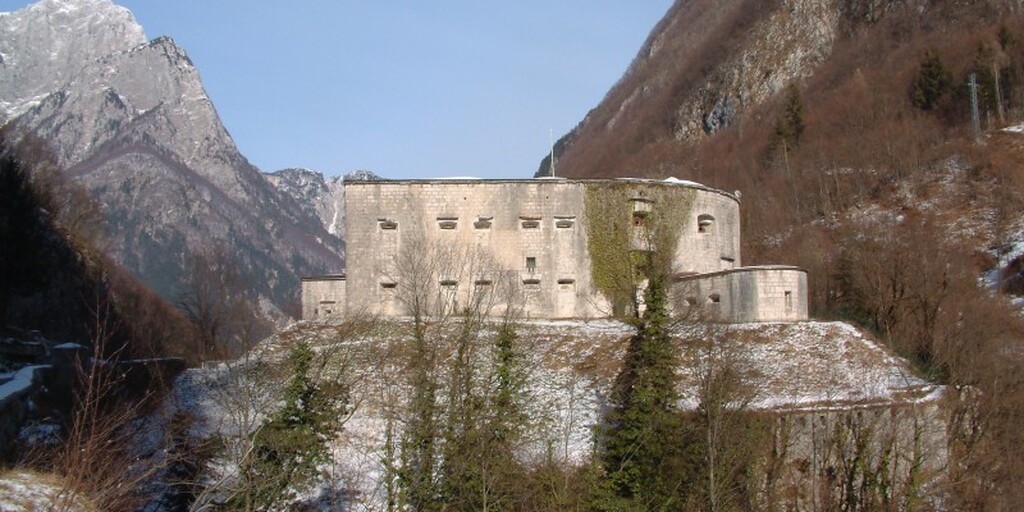
Kluže Fort has played a significant role in history. It lies at the entrance to the Bovec Valley in an area known as the Bovec Door. Originally built of wood, the fort was replaced by stone over the years. It played a key role in defending against Ottoman invasions, Napoleonic attacks, and the Battles of the Soča River during World War I. This Austro-Hungarian fort, built between 1881 and 1882, came under heavy fire from Italian artillery during World War I. None of the garrison were killed. Once you're finished, cross the road and take the path to Fort Hermann. The walk to the fort is truly spectacular. Enjoy! It was built in 1472 as a fortress between Bovec on the road to Cave del Predil and Carinthia. It likely initially served as a defense of Friuli against the Turks.
Ravelnik Open Air Museum
The Ravelnik Open-Air Museum is a former Austro-Hungarian first line of defense dating back to 1900 and offers a good overview of the Austro-Hungarian front line during the World War. You can visit some of the ruins and see how soldiers spent their days here.
 Links
Links  Usage
Usage Want to download this route?
You can download the route for free without MyRoute-app account. To do so, open the route and click 'save as'. Want to edit this route?
No problem, start by opening the route. Follow the tutorial and create your personal MyRoute-app account. After registration, your trial starts automatically.  Disclaimer
Use of this GPS route is at your own expense and risk. The route has been carefully composed and checked by a MyRoute-app accredited RouteXpert for use on TomTom, Garmin and MyRoute-app Navigation.
Changes may nevertheless have occurred due to changed circumstances, road diversions or seasonal closures. We therefore recommend checking each route before use.
Preferably use the route track in your navigation system. More information about the use of MyRoute-app can be found on the website under 'Community' or 'Academy'.
Changes may nevertheless have occurred due to changed circumstances, road diversions or seasonal closures. We therefore recommend checking each route before use.
Preferably use the route track in your navigation system. More information about the use of MyRoute-app can be found on the website under 'Community' or 'Academy'.
 Nearby routes
Goriska
About this region
Goriška is a historical region in western Slovenia on the border with Italy. It comprises the northern part of the wider traditional region of the Slovenian Littoral (Primorska). The name Goriška is an adjective referring to the city of Gorizia, its historical and cultural centre.
Read more on Wikipedia
View region
 Statistics
  16
16Amount of RX reviews (Goriska)
 19306
19306Amount of visitors (Goriska)
 1574
1574Amount of downloads (Goriska)
 Route Collections in this region
 The 12 most beautiful car and motorcycle routes in Carinthia
“Motorradland Kärnten” where you feel so wonderfully welcome as a motorcyclist!
Own website for motorcyclists, own curated routes, hotels, campsites and guest houses with attention for motorcyclists, a wonderful area where motorcyclists are very popular.
Kärnten or Carinthia, at the crossroads of the Germanic, Slavic and Roman worlds. Three cultures within a few kilometres, southern flair, culinary delights, cross-border tours. Breakfast in Italy, lunch in Slovenia, dinner in Austria - all in one day. Experience the diversity in the borderless Alps-Adriatic region, the area for motorcyclists.
Extensive day trips on winding mountain paths, romantic panoramic routes and beautiful lakes, here the 12 TOP routes Kärnten / Carinthia. Enjoy!
Own website for motorcyclists, own curated routes, hotels, campsites and guest houses with attention for motorcyclists, a wonderful area where motorcyclists are very popular.
Kärnten or Carinthia, at the crossroads of the Germanic, Slavic and Roman worlds. Three cultures within a few kilometres, southern flair, culinary delights, cross-border tours. Breakfast in Italy, lunch in Slovenia, dinner in Austria - all in one day. Experience the diversity in the borderless Alps-Adriatic region, the area for motorcyclists.
Extensive day trips on winding mountain paths, romantic panoramic routes and beautiful lakes, here the 12 TOP routes Kärnten / Carinthia. Enjoy!
View Route Collection
Roundtrip Eastern Europe via Slovenia Croatia and Bosnia Herzegovina
This route collection builds up to one great adventure in Eastern Europe. All routes combined make a 19 day roundtrip through Germany, Austria, Italy, Slovenia, Croatia, and Bosnia Herzegovina. It aims to show the beauty of Eastern Europe, displaying how relaxed it can be to ride here. Quiet roads, friendly people, good food and impressive nature and culture will be your host throughout the trip.
As there’s so much to see and experience along the route, you might want to plan a longer trip than the 19 days. What about staying an extra day at Lake Bled (Slovenia)? Or taking some time in Zadar (Croatia) to marvel at the old city and its beautiful sea view. Or what about the idea to stay an extra day in Mostar (Bosnia and Herzegovina) to soak up the coffee culture and the city’s atmosphere? Or go hiking at the Plitvice Lakes (Croatia)? Or do a via Ferrata in Logarska Dolina (Slovenia)? Or … The options are too numerous to mention them all.
And off course, travelling through the Black Forest, the Alps and Dolomites is always a beautiful experience. Along your way you’ll have plenty opportunities to enjoy impressive sights, both natural and cultural.
The length of the routes are long enough so you can cover distances, as well as spend time to stop and enjoy natural and cultural highlights. Please do note that the routes may demand solid riding skills and a good condition. The main roads in Eastern Europe are definitely improving, but for this collection a large number of smaller scenic roads have been selected to make the riding more adventurous. Please be aware that these smaller roads can be in poor condition as they are not so frequently used and maintained.
As there’s so much to see and experience along the route, you might want to plan a longer trip than the 19 days. What about staying an extra day at Lake Bled (Slovenia)? Or taking some time in Zadar (Croatia) to marvel at the old city and its beautiful sea view. Or what about the idea to stay an extra day in Mostar (Bosnia and Herzegovina) to soak up the coffee culture and the city’s atmosphere? Or go hiking at the Plitvice Lakes (Croatia)? Or do a via Ferrata in Logarska Dolina (Slovenia)? Or … The options are too numerous to mention them all.
And off course, travelling through the Black Forest, the Alps and Dolomites is always a beautiful experience. Along your way you’ll have plenty opportunities to enjoy impressive sights, both natural and cultural.
The length of the routes are long enough so you can cover distances, as well as spend time to stop and enjoy natural and cultural highlights. Please do note that the routes may demand solid riding skills and a good condition. The main roads in Eastern Europe are definitely improving, but for this collection a large number of smaller scenic roads have been selected to make the riding more adventurous. Please be aware that these smaller roads can be in poor condition as they are not so frequently used and maintained.
View Route Collection