
02A Calendon Genadendal Greyton Swellendam Adventure

This route was brought to you by:
RouteXpert René Plücken (MRA Master)
Last edit: 15-12-2025
 Route Summary
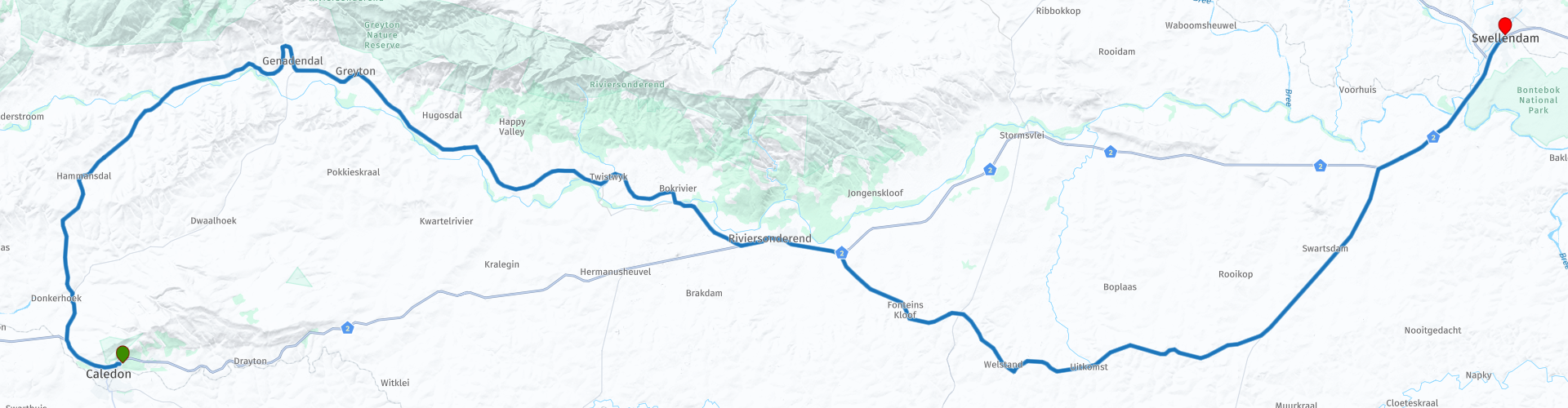
 This is a scenic drive from Caledon via Greyton Swellendam of over 142 kilometres, largely on unpaved roads.
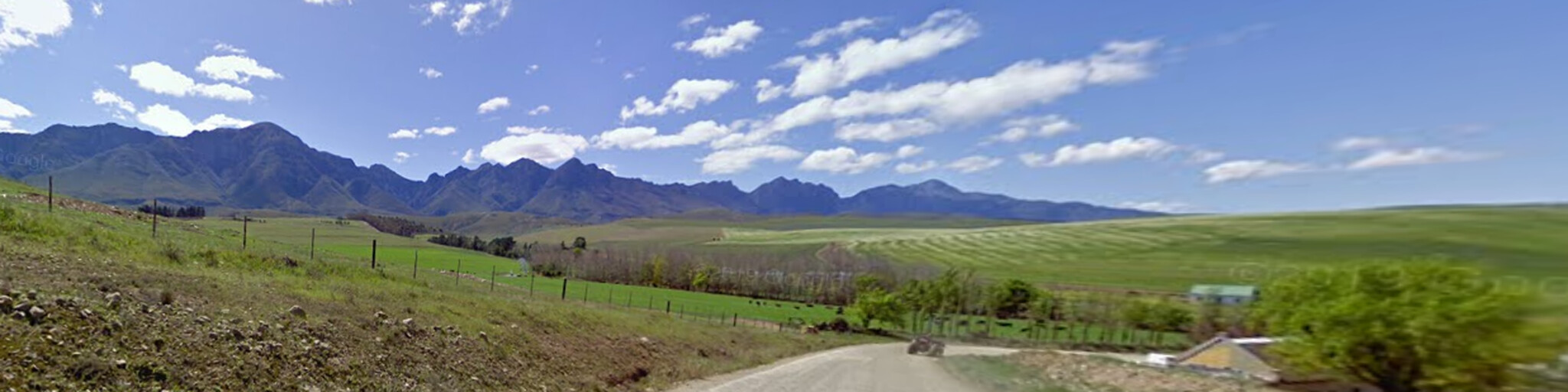
We'll drive through South Africa's beautiful countryside, past the Riviersonderend Mountains with their 26 peaks. You'll enjoy the stunning panoramas.
Because this route involves mostly unpaved or gravel roads, an enduro, adventure bike, quad, or 4x4 is recommended. Some experience riding on these types of roads is essential. A paved road route has also been created. The paved road route (02 Calendon Genadendal Greyton Swellendam) is included in the RouteXpert library; the link can be found in this review.
Along the route, stops are planned in Genadendal (the first mission post in Southern Africa) and Greyton. Enjoy this beautiful drive, which I rate 5 stars.
 Share this route


Animation

Verdict


Duration
6h 15m

Mode of travel
Car or motorcycle

Distance
142.49 km

Countries

 RouteXpert Review
 Because this route is mostly on unpaved or gravel roads, an enduro, adventure bike, quad, or 4x4 is recommended. Some experience riding on these types of roads is essential. There is also a route that runs on paved roads (see the link in this review).
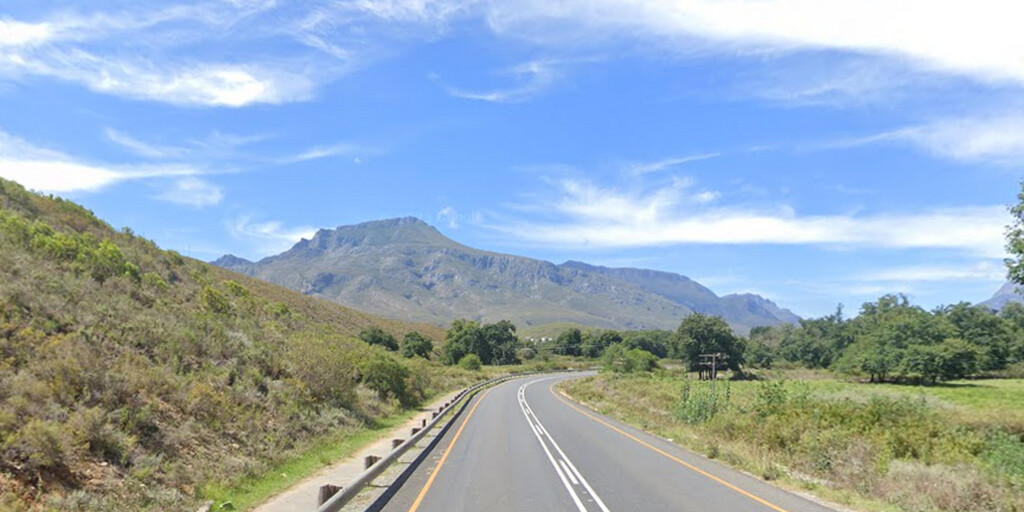
We drive through the Riviersonderend Nature Reserve with the rugged mountains of the Riviersonderend Mountains on the right, with 26 peaks, the highest of which is the Pilaarkop with a height of 1653 meters.
The first stop is Genadendal (Valley of Grace), an old missionary village with a German-Dutch past, located on the Baviaanskloof (Baviaansvlei). Genadendal was the first mission post in Southern Africa and was founded on April 23, 1738, by the German missionary Georg Schmidt of the Moravian Church. He settled in Baviaanskloof and began evangelizing among the indigenous Khoi people.
Visit the Genadendal Mission Museum. Step back in time and get a glimpse of what life was like hundreds of years ago. The museum is located on the site of the original mission station and comprises several buildings that have been in use since the mission's founding. Declared a national monument in 1980, the buildings house exhibits that tell the story of Genadendal.
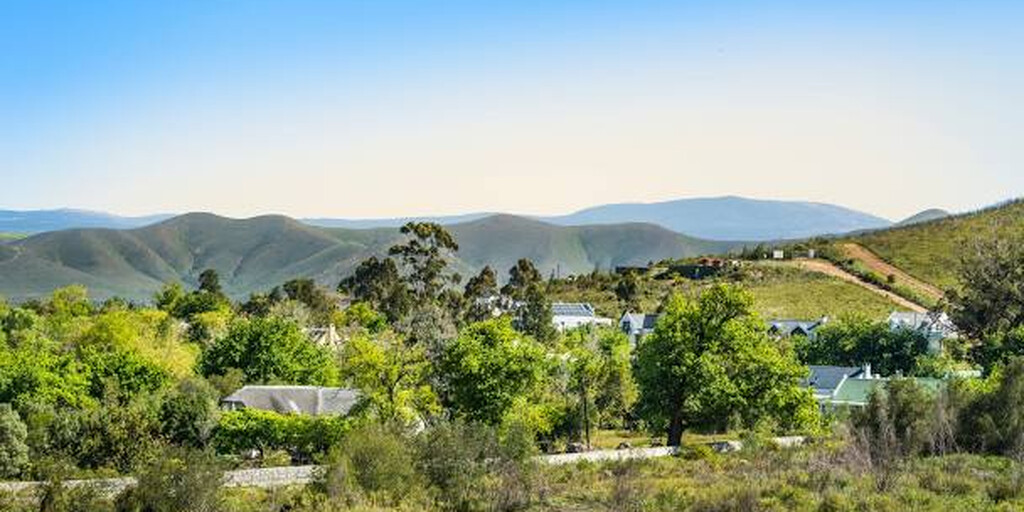
After a short drive, we arrive in Greyton, a picturesque village surrounded by ancient oak trees, nestled in the sleepy Overberg region between Cape Town and Caledon, at the foot of the Riviersonderend Mountains. Stroll through the village with its thatched cottages, beautiful gardens, shops, and relax on a terrace with a delicious cup of coffee and a locally made chocolate. Enjoy the view and the exceptionally friendly people who live here. Greyton is a popular destination for those who love antiques and art, and the historic buildings like the church and the old post house also draw you.
Greyton is also an outdoor paradise for mountain bikers and hikers. Numerous trails lead from the village, past rivers, waterfalls, and lakes. So if you have the time, rent a mountain bike and explore the beautiful surroundings.
We continue our journey to the village of Riviersonderend, marveling at the stunning views along the Riviersonderend ridge. Halfway through, we pass the Oaks Estate, a historic, recently restored Cape Dutch working farm with a mountain reserve and a range of activities, including a venue for weddings, events, and conferences, luxury bed and breakfast accommodation, and an authentic farm experience. The estate is nestled in a beautiful rural setting, on the banks of the Riviersonderend River and at the foot of the majestic mountains.
Our next stop is Riviersonderend, a small farming village with a peaceful rural atmosphere, surrounded by farms. The village offers the tranquility of a beautiful mountain and river landscape, a nine-hole golf course, and numerous other activities. The village is also just an hour's drive from several beaches.
The town's name is believed to derive from the perpetually flowing Sonderend River at the foot of the mountains. Riviersonderend, or "River Without End" ("Neverending River") as it was formerly known, was founded in 1923 when Miss Edith S.V. McIntyre sold the Tierhoek farm for £6,000 to the church council of the local Dutch Reformed Church at the time the congregation was established.
Riviersonderend is a convenient base for exploring the surrounding countryside, and several tourist buses stop here as they pass through town. Nature lovers will enjoy the stunning views over the Riviersonderend Valley. Take in the beautiful wildflowers, fynbos, fresh air, mountains, and picturesque vistas that the Riviersonderend Mountain has to offer.
Several restaurants are located on Riviersonderend's Main Road, making it the perfect spot for a lunch break. After lunch, we continue our journey to our final destination, Swellendam, a charming town with a rich history and the third-oldest town in the country after Cape Town and Stellenbosch, founded in 1745. Explore the town on foot and admire the beautiful old buildings at your leisure. Swellendam is nestled in a beautiful green valley at the foot of the Langenberg Mountains, a little oasis in itself!
It's a quiet town known for its berries, architecture, and history. Swellendam was once the last outpost of civilization in the eastern Western Cape, and as a result, it became a vibrant trading center. Now strategically located between Cape Town and George, it's a popular destination for tourists passing through. Numerous coffee shops with inviting terraces, as well as charming restaurants and small shops, make your stay here more than enjoyable.
During your stay in Swellendam, a visit to Bontebok National Park, the smallest national park in the Western Cape, is definitely worthwhile. The bontebok was nearly wiped out due to excessive hunting; only 30 remained when the decision was made in 1931 to establish a national park and protect them. A herd of approximately 200 bontebok now lives in the park. This medium-sized antelope species is recognizable by the bright white markings on its head, legs, and rump. Besides the bontebok, other antelope species in the park include red hartebeest, steenbok, and Cape grysbok. You'll also find Cape mountain zebras, caracal, foxes, hyenas, and river otters.
The park consists primarily of fynbos and over 470 plant species, which bloom in spring. During this time, the area is a beautiful sea of flowers. Over 200 different bird species live in the park, including blue cranes, fish eagles, and double-collared sunbirds, as well as rare species like the Klaas's cuckoo and the water thick-knee. The Breede River and Die Stroom are ideal spots for fishing, swimming, picnicking, and birdwatching.
Another recommended destination is the Marloth Nature Reserve, named after botanist Rudolf Marloth. It's a nature reserve in the Langeberg Mountains of South Africa. It's known for its stunning scenery, hiking trails, and diverse flora and fauna, including rare animals and unique vegetation. Visitors can enjoy hiking, mountain biking, birdwatching, horseback riding, and picnics.
There are several hotels in Swellendam where you can stay overnight, enjoy your stay.
 Links
Links  Usage
Usage Want to download this route?
You can download the route for free without MyRoute-app account. To do so, open the route and click 'save as'. Want to edit this route?
No problem, start by opening the route. Follow the tutorial and create your personal MyRoute-app account. After registration, your trial starts automatically.  Disclaimer
Use of this GPS route is at your own expense and risk. The route has been carefully composed and checked by a MyRoute-app accredited RouteXpert for use on TomTom, Garmin and MyRoute-app Navigation.
Changes may nevertheless have occurred due to changed circumstances, road diversions or seasonal closures. We therefore recommend checking each route before use.
Preferably use the route track in your navigation system. More information about the use of MyRoute-app can be found on the website under 'Community' or 'Academy'.
Changes may nevertheless have occurred due to changed circumstances, road diversions or seasonal closures. We therefore recommend checking each route before use.
Preferably use the route track in your navigation system. More information about the use of MyRoute-app can be found on the website under 'Community' or 'Academy'.
 Nearby routes
South Africa
About this region
South Africa, officially the Republic of South Africa (RSA), is the southernmost country in Africa. Its nine provinces are bounded to the south by 2,798 kilometres (1,739 miles) of coastline that stretches along the South Atlantic and Indian Ocean; to the north by the neighbouring countries of Namibia, Botswana, and Zimbabwe; to the east and northeast by Mozambique and Eswatini; and it encloses Lesotho. Covering an area of 1,221,037 square kilometres (471,445 square miles), the country has over 62 million people. Pretoria is the administrative capital, while Cape Town, as the seat of Parliament, is the legislative capital. Bloemfontein has traditionally been regarded as the judicial capital. The largest and most populous city is Johannesburg, followed by Cape Town and the busiest port city in sub-Saharan Africa, Durban.
Archaeological findings suggest that various hominid species existed in South Africa about 2.5 million years ago, and modern humans inhabited the region over 100,000 years ago. The first known people were the indigenous Khoisan, and Bantu-speaking peoples who expanded from West and Central Africa later settled in the region 2,000 to 1,000 years ago. In the north, the Kingdom of Mapungubwe formed in the 13th century. In 1652, the Dutch established the first European settlement at Table Bay, and in 1795 and 1806, the British occupied it. The Mfecane, a period of significant upheaval, led to the formation of various African kingdoms, including the Zulu Kingdom. The region was further colonised, and diamonds and gold were discovered, bringing a shift towards industrialisation and urbanisation. The Union of South Africa was created in 1910 out of the former Cape, Natal, Transvaal, and Orange River colonies, becoming a republic in 1961. Though a system of non-racial franchise had existed in the Cape, it was gradually eroded, and the vast majority of Black South Africans were not enfranchised until 1994.
The National Party imposed apartheid in 1948, institutionalising previous racial segregation. After a largely non-violent struggle by the African National Congress and other anti-apartheid activists both inside and outside the country, the repeal of discriminatory laws began in the mid-1980s. Universal elections took place in 1994, following which all racial groups have held political representation in the country's liberal democracy, which comprises a parliamentary republic and nine provinces.
South Africa is a multi-ethnic society encompassing a wide variety of cultures, languages, and religions; it is often referred to as the "rainbow nation" to describe the country's multicultural diversity, especially in the wake of apartheid. As a middle power in international affairs, South Africa maintains a significant regional influence. In addition to that, the country is a member of BRICS+, the African Union, SADC, SACU, the Commonwealth of Nations, and the G20. A developing, newly industrialised country, South Africa has the largest economy in Africa by nominal GDP. It is tied with Ethiopia for the most UNESCO World Heritage Sites in Africa, and is a biodiversity hotspot with unique biomes, plant, and animal life. Since the end of apartheid, government accountability and quality of life have substantially improved. However, crime, poverty, and inequality remain widespread. Having the highest Gini coefficient of 0.63, South Africa is considered one of the most unequal countries in the world, if not the most unequal.
Read more on Wikipedia
Archaeological findings suggest that various hominid species existed in South Africa about 2.5 million years ago, and modern humans inhabited the region over 100,000 years ago. The first known people were the indigenous Khoisan, and Bantu-speaking peoples who expanded from West and Central Africa later settled in the region 2,000 to 1,000 years ago. In the north, the Kingdom of Mapungubwe formed in the 13th century. In 1652, the Dutch established the first European settlement at Table Bay, and in 1795 and 1806, the British occupied it. The Mfecane, a period of significant upheaval, led to the formation of various African kingdoms, including the Zulu Kingdom. The region was further colonised, and diamonds and gold were discovered, bringing a shift towards industrialisation and urbanisation. The Union of South Africa was created in 1910 out of the former Cape, Natal, Transvaal, and Orange River colonies, becoming a republic in 1961. Though a system of non-racial franchise had existed in the Cape, it was gradually eroded, and the vast majority of Black South Africans were not enfranchised until 1994.
The National Party imposed apartheid in 1948, institutionalising previous racial segregation. After a largely non-violent struggle by the African National Congress and other anti-apartheid activists both inside and outside the country, the repeal of discriminatory laws began in the mid-1980s. Universal elections took place in 1994, following which all racial groups have held political representation in the country's liberal democracy, which comprises a parliamentary republic and nine provinces.
South Africa is a multi-ethnic society encompassing a wide variety of cultures, languages, and religions; it is often referred to as the "rainbow nation" to describe the country's multicultural diversity, especially in the wake of apartheid. As a middle power in international affairs, South Africa maintains a significant regional influence. In addition to that, the country is a member of BRICS+, the African Union, SADC, SACU, the Commonwealth of Nations, and the G20. A developing, newly industrialised country, South Africa has the largest economy in Africa by nominal GDP. It is tied with Ethiopia for the most UNESCO World Heritage Sites in Africa, and is a biodiversity hotspot with unique biomes, plant, and animal life. Since the end of apartheid, government accountability and quality of life have substantially improved. However, crime, poverty, and inequality remain widespread. Having the highest Gini coefficient of 0.63, South Africa is considered one of the most unequal countries in the world, if not the most unequal.
View region
 Statistics
  22
22Amount of RX reviews (South Africa)
 1242
1242Amount of visitors (South Africa)
 12
12Amount of downloads (South Africa)