
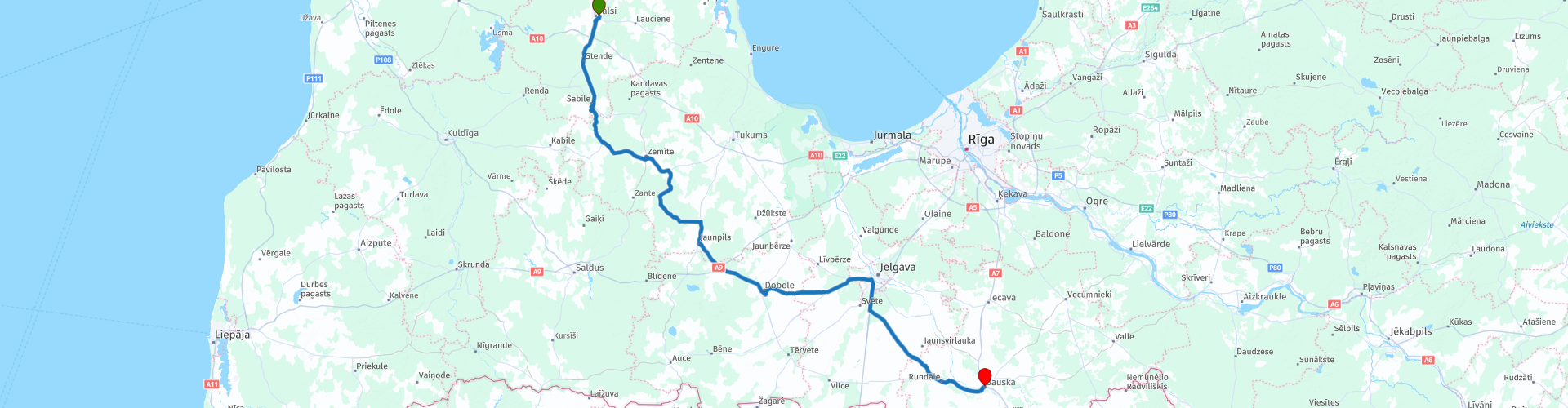
Latvia from Talsi

This route was brought to you by:
RouteXpert Jan Koelstra - Senior Rx
Last edit: 06-02-2026
 Route Summary
 In Dobele, the mighty castle ruins and the famous lilac farm form a beautiful contrast between stone and flowers. The route continues to Jelgava, the former capital of the Duchy of Courland. Here, the enormous Baroque Jelgava Palace (designed by Rastrelli) dominates the skyline. Also visit the tower of the Trinity Church for a unique view of the city.
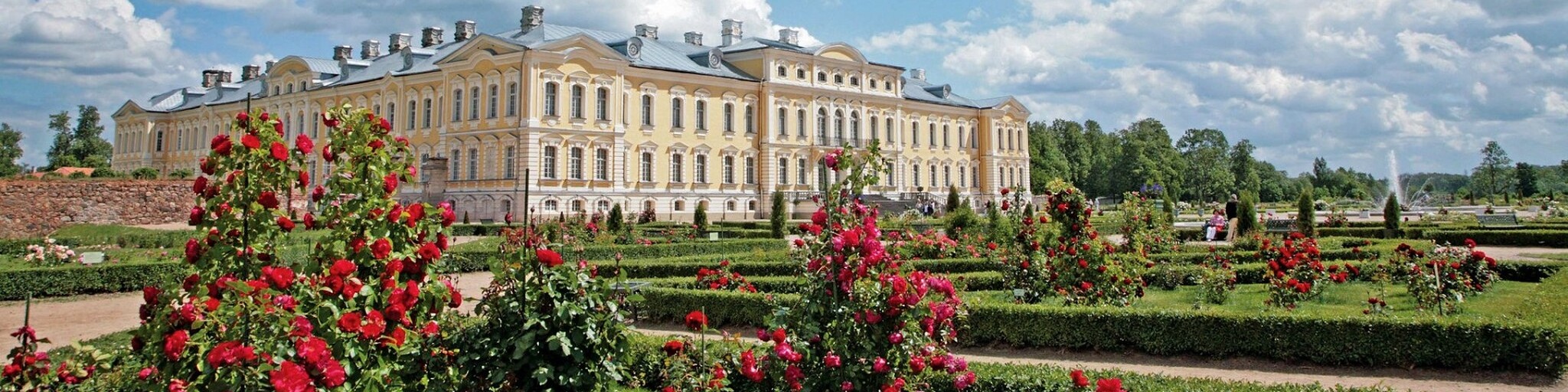
After a stop at Vircava Park, you'll reach the absolute highlight: Rundāle Palace. This masterpiece of rococo architecture, also by Rastrelli, is rightly called the "Versailles of the North." The opulent halls and expansive rose gardens are breathtaking. The tour concludes in Bauska, where the castle watches over the confluence of the Mūša and Mēmele rivers.
This route has been awarded a 4-star rating due to its variety of nature and culture, pleasant roads, and hospitable people.
 Share this route


Animation

Verdict


Duration
6h 55m

Mode of travel
Car or motorcycle

Distance
186.99 km

Countries

 RouteXpert Review
 Talsi (starting point)
The City of Nine Hills, Talsi, is one of Latvia's most picturesque towns, often called the "Green Pearl of Kurzeme." Built on nine hills surrounding two lakes, the city offers stunning elevation changes and stunning views. The Old Town boasts narrow streets lined with historic wooden architecture from the 19th century. The atmosphere is calm and authentic. The fortress on Castle Hill was once an important Kurorish settlement. From the top, you have a panoramic view of Lake Talsi and the city. The local museum, housed in a former manor house, provides in-depth information on local history, art, and the famous Latvian folk costume.
Sabile
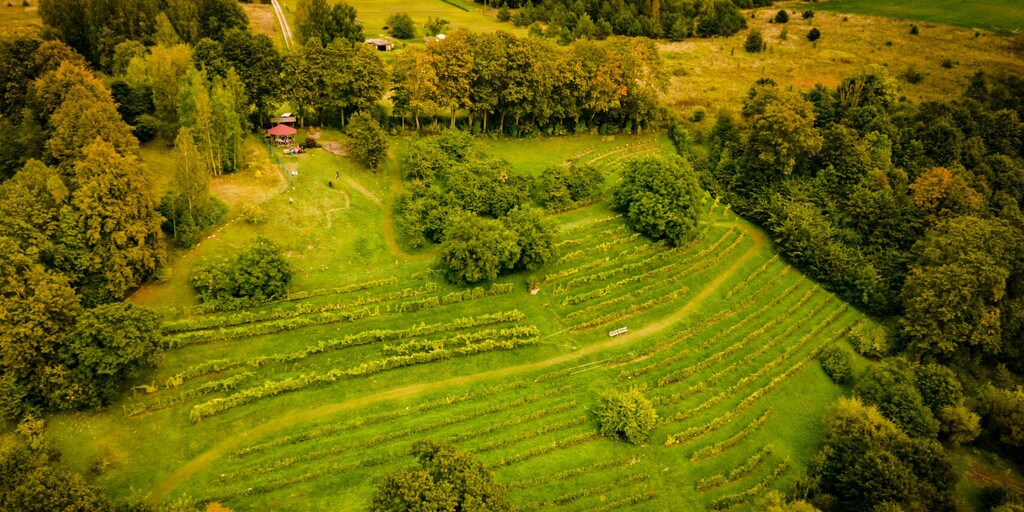
Sabile is located in the beautiful Abava Valley, an area sometimes called the "Switzerland of Kurzeme." The town, with its wine hills, is world-famous for its northernmost vineyard (included in the Guinness World Records). The Wine Festival is held here annually in July. The town also boasts a castle hill and a museum. All in all, it has become a pleasant tourist destination. A short distance from the town center is the Pedvāle Open-Air Art Museum, where nature and modern sculpture merge.
on the way to Jaunpils
The villages of Pūces, Zemīte, and Strutele are the heart of Latvian folklore. Between the larger towns, you'll drive through farmland, where time sometimes seems to stand still. In Pūces, you'll find a historic watermill. This area exudes the atmosphere of the old Latvian countryside. Zemīte boasts a stately manor house with a park filled with ancient oak trees. Legend has it that the knights' hall is haunted, adding to its mystical charm. For lovers of Latvian culture, this is a sacred place. Krišjānis Barons, the collector of "Dainas" (folk songs) and the father of Latvian folklore, grew up here. The manor house in Strutele and the nearby church bear silent witness to this rich history.
Jaunpils (coffee break)
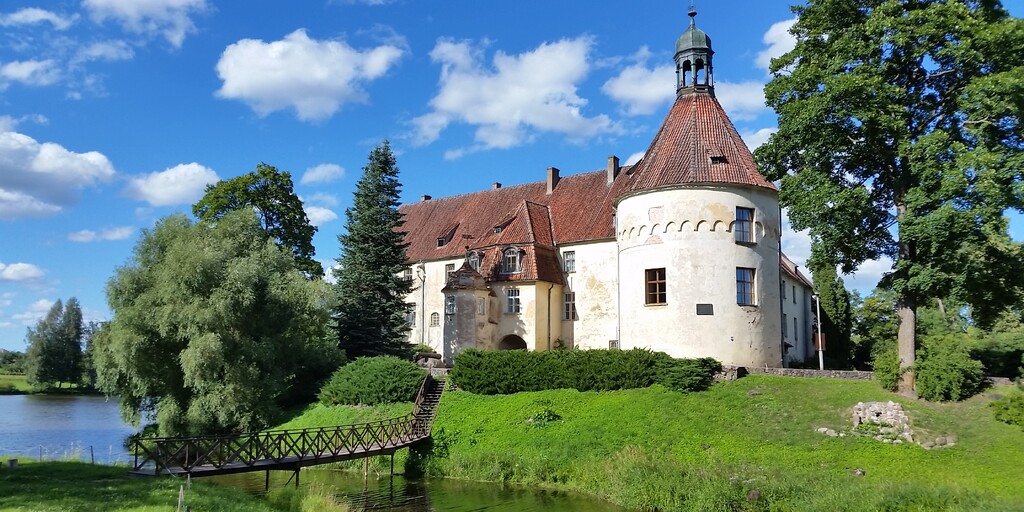
In Jaunpils, you'll find one of the few castles in Latvia that still looks almost exactly as it did in the 14th century. This fortified castle, surrounded by water, was built by the Livonian Order. What makes it unique is the interactive experience: you can enjoy medieval meals (with your hands!), don a monk's robe, and learn about the weapons of the time. Near the castle stands a well-preserved watermill where you can see how grain was once ground.
Double
The town of Dobele marks the transition to the Zemgale plains and is famous for its floral splendor. The imposing stone walls of the former Zemgale castle, later a Crusader castle, have recently been partially preserved and fitted with a modern glass roof, making it a unique exhibition venue. In Dobele, the Pēteris Upīts Lilac Garden is a must-see if you're traveling in May or June. It's one of the largest lilac collections in Europe, with hundreds of varieties filling the air with an intoxicating fragrance.
Jelgava (lunch break)
Jelgava was once the capital of the Duchy of Courland and Semigallia, and this is reflected in the scale of its monuments. Jelgava Palace, designed by the renowned architect Bartolomeo Rastrelli (also known for the Hermitage Museum in St. Petersburg), is the largest Baroque palace in the Baltic States. In its cellars, you'll find the tombs of the Dukes of Courland. Although the Holy Trinity Church itself was destroyed during World War II, its tower has been restored. Inside, you'll find interactive exhibits, and from the top, you'll have a magnificent view of the city and the Lielupe River. Pasta Sala (Post Island) is a modern recreational park on the river, known for its annual sand and ice sculpture festivals.
Just below Jelgava lies Vircava, a village known for the ducal hunting lodge. Although much of the palace complex has been lost, the park is still worth a visit for its Baroque architecture and the atmosphere of a bygone era.
Rundāle Palace
This is undoubtedly the crown jewel of the route. Rundāle Palace is a masterpiece of Baroque and Rococo architecture and is also known as the Versailles of the North. Admire the Golden Hall (the throne room), the White Hall (the ballroom), and the opulent private apartments of the Duke and Duchess. The ceilings and wall decorations are of an unprecedented quality. The French garden is symmetrically laid out and surrounded by a canal. The rose garden is world-famous and contains thousands of varieties, including historic roses found nowhere else.
Bauska (end point)
The route ends in Bauska, a town strategically located at the confluence of the Mūša and Mēmele rivers to form the Lielupe. Bauska Castle consists of two parts: the impressive ruins of a 15th-century fortress of the Livonian Order and a later, fully restored Renaissance-style palace of the Dukes of Courland. It is the only 17th-century town hall in Latvia to have been rebuilt in its original form. The surrounding market square is the vibrant heart of the town.
 Links
Links  Usage
Usage Want to download this route?
You can download the route for free without MyRoute-app account. To do so, open the route and click 'save as'. Want to edit this route?
No problem, start by opening the route. Follow the tutorial and create your personal MyRoute-app account. After registration, your trial starts automatically.  Disclaimer
Use of this GPS route is at your own expense and risk. The route has been carefully composed and checked by a MyRoute-app accredited RouteXpert for use on TomTom, Garmin and MyRoute-app Navigation.
Changes may nevertheless have occurred due to changed circumstances, road diversions or seasonal closures. We therefore recommend checking each route before use.
Preferably use the route track in your navigation system. More information about the use of MyRoute-app can be found on the website under 'Community' or 'Academy'.
Changes may nevertheless have occurred due to changed circumstances, road diversions or seasonal closures. We therefore recommend checking each route before use.
Preferably use the route track in your navigation system. More information about the use of MyRoute-app can be found on the website under 'Community' or 'Academy'.

Semigalia
About this region
Semigallia, also spelt Semigalia, (Latvian: Zemgale; German: Semgallen; Lithuanian: Žiemgala; Polish: Semigalia; Livonian: Zemgāl) is one of the Historical Latvian Lands located in the south of the Daugava river and the north of the Saule region of Samogitia. The territory split between Latvia and Lithuania, previously inhabited by the Semigallian Baltic tribe. They are noted for their long resistance (1219–1290) against the German crusaders and Teutonic Knights during the Northern Crusades. Semigallians had close linguistic and cultural ties with Samogitians.
Read more on Wikipedia
View region
 Statistics
  2
2Amount of RX reviews (Semigalia)
 440
440Amount of visitors (Semigalia)
 7
7Amount of downloads (Semigalia)
 Route Collections in this region
 Latvia
Latvia is the ultimate destination for travelers who appreciate a harmonious blend of unspoiled nature, a touch of melancholic history, and a surprisingly hip culture. This Baltic gem offers peace, space, and an authentic atmosphere rarely found in Western Europe.
Your adventure will almost certainly begin in the capital. Riga is a city of contrasts: from the medieval streets of the Old Town (Vecrīga) to the world-famous Art Nouveau district. Nowhere else in the world will you find a higher concentration of beautifully decorated facades. It's a city where you can enjoy stately architecture by day and a vibrant nightlife in trendy "secret bars" by night.
On the west coast lies Liepāja, a city with a rebellious edge. It's known for its endless white-sand beaches and strong ties to music. For the daring, the Karosta district is a must: this former military port houses a notorious prison where you can now even spend the night for the ultimate (and slightly macabre) experience.
In the southeast, near the border with Lithuania and Belarus, lies Daugavpils. This city has a unique character. The enormous 19th-century fortress is its absolute highlight. Here you'll also find the Mark Rothko Art Center; the world-famous painter was born in this city.
For a more intimate, fairytale-like experience, head to Talsi. This town, built on nine hills and surrounded by lakes and orchards, is the perfect place to slow down, wander the historic streets lined with wooden houses, and experience pure Latvian hospitality.
Latvia isn't simply a country you visit, but one you truly experience. Whether you choose the urban grandeur or the mystical forests, the charm of the Baltic coast will stay with you long after. Looking for a series of road trips filled with historic cities, picturesque villages, unique spots, and stunning scenery? Then this collection of four routes will make for a truly enjoyable holiday. What's more, they're easy to combine, as each route explores a unique part of Latvia.
Your adventure will almost certainly begin in the capital. Riga is a city of contrasts: from the medieval streets of the Old Town (Vecrīga) to the world-famous Art Nouveau district. Nowhere else in the world will you find a higher concentration of beautifully decorated facades. It's a city where you can enjoy stately architecture by day and a vibrant nightlife in trendy "secret bars" by night.
On the west coast lies Liepāja, a city with a rebellious edge. It's known for its endless white-sand beaches and strong ties to music. For the daring, the Karosta district is a must: this former military port houses a notorious prison where you can now even spend the night for the ultimate (and slightly macabre) experience.
In the southeast, near the border with Lithuania and Belarus, lies Daugavpils. This city has a unique character. The enormous 19th-century fortress is its absolute highlight. Here you'll also find the Mark Rothko Art Center; the world-famous painter was born in this city.
For a more intimate, fairytale-like experience, head to Talsi. This town, built on nine hills and surrounded by lakes and orchards, is the perfect place to slow down, wander the historic streets lined with wooden houses, and experience pure Latvian hospitality.
Latvia isn't simply a country you visit, but one you truly experience. Whether you choose the urban grandeur or the mystical forests, the charm of the Baltic coast will stay with you long after. Looking for a series of road trips filled with historic cities, picturesque villages, unique spots, and stunning scenery? Then this collection of four routes will make for a truly enjoyable holiday. What's more, they're easy to combine, as each route explores a unique part of Latvia.
View Route Collection