
Marina Baja from Villajoyosa

This route was brought to you by:
RouteXpert Jan Koelstra - Senior Rx
Last edit: 01-08-2025
 Route Summary
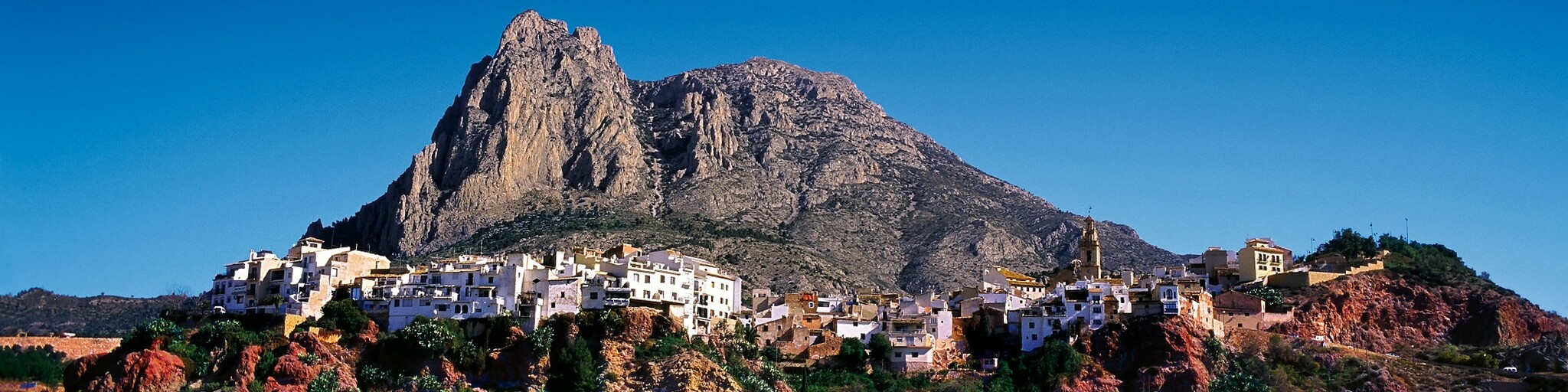
 The coastal towns in this region each have their own unique charm. You can lose yourself in a stroll through the historic center of Altea, explore the Albir lighthouse in L'Alfàs del Pi, or stroll through the quiet, charming streets of Finestrat in the shadow of Puig Campana. Villajoyosa, with its colorful fishermen's houses and hanging houses on the edge of the old town, is also a must-see. But the most famous city in this region is undoubtedly Benidorm, whose skyline combines skyscrapers with the mountain ranges of the Serra Gelada Natural Park. It is a fashionable coastal town with the beautiful beaches of Poniente and Levante.
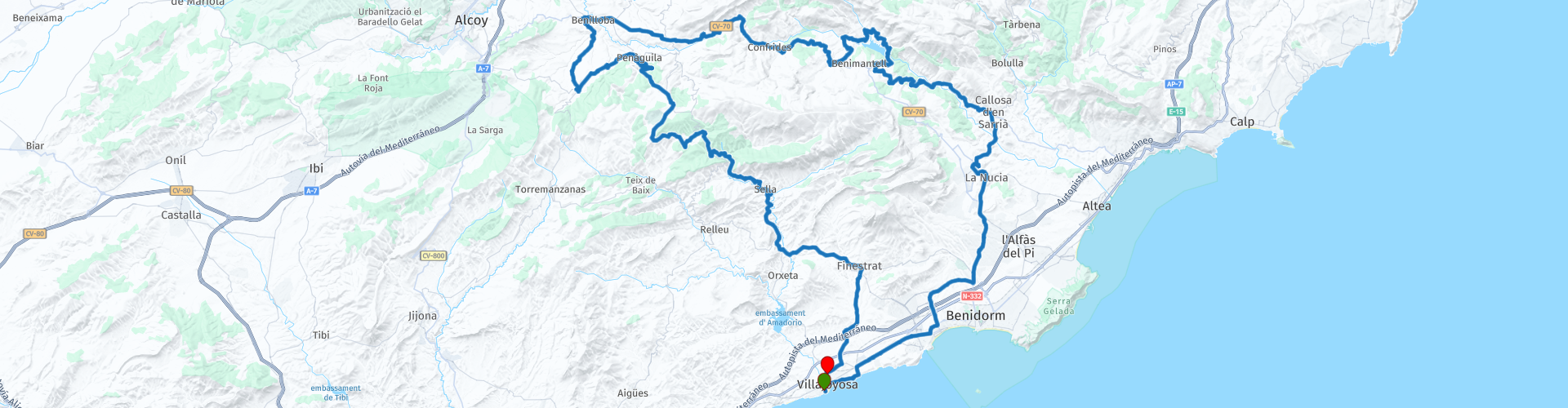
This circular route, primarily through the Marina Baja hinterland, begins and ends in Villajoyosa. Passing through the low-rise town of Benidorm, you'll drive through La Nucia and Polop, with its 211 fountains, inland to the region's biggest attraction: the Moorish town of Guadalest, perched high on a rock and accessible only through an opening in the rock, overlooking the eponymous reservoir. Enjoy a fantastic lunch and take a drive through the rugged mountain landscape and authentic mountain villages with resounding Moorish names like Benasau, Benifallim, and Beniloba, perhaps accompanied by wild animals on Safari Aitana. You'll pass the renowned climbing village of Sella, with its ravines and waterfalls. Refuel on a terrace in Finestrat, and once you're almost back at your destination, you can finally indulge in a chocolate addiction. Now that's worth 5 stars, isn't it?
 Share this route


Animation

Verdict


Duration
5h 49m

Mode of travel
Car or motorcycle

Distance
122.51 km

Countries

 RouteXpert Review
 This tour starts and ends in the coastal town of Villajoyosa/La Vila Joiosa. You'll tour the interior of the Marina Baja, visiting the beautifully situated Polop with its fountains. You'll visit the region's main attraction: the Moorish town of Guadalest, perched high on a rock and accessible only through a gap in the rock, overlooking the eponymous reservoir. You'll drive through the rugged mountain landscape and visit authentic mountain villages with resounding Moorish names like Benifallim, Benasau, and Beniloba. Enjoy a safari along the way. You'll pass the famous climbing village of Sella with its ravines and waterfalls. Back in civilization, enjoy a drink on a terrace in Finestrat, and, as you near your destination, indulge in a chocolate addiction.
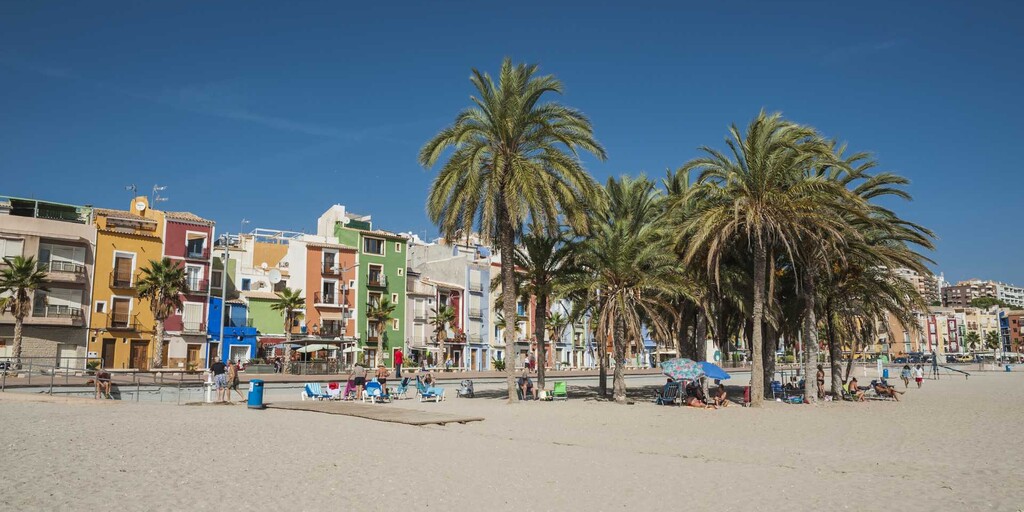
The Amadòrio River flows through Villajoyosa. The fishing village of Villajoyosa originated in the Bronze Age, and the hill where the old town is located was an Iberian settlement. The town played a vital role in coastal defense. Several watchtowers were built for this purpose, and these can still be seen today. Villajoyosa is located directly on the sea and boasts a 3.5-kilometer-long beach! In some places, the beach is almost 100 meters wide! This, combined with the fact that it's not a particularly touristy town, ensures you won't be crammed together on the beach, and you'll have plenty of space. The most characteristic feature of the beach, and indeed of Villajoyosa itself, are the typical, brightly colored fishermen's houses that line the town's shoreline. These houses are painted in cheerful, bright colors so that the fishermen could see exactly where they needed to go from the sea to reach home.
Are you a chocolate lover? Then you're in the right place! In Villajoyosa, you'll find three chocolate factories open to the public for a tour. Here you'll find the factories of the famous Valencian brand Valor, Chocolates Clavíleño, and Chocolates Perez. These combine a shop and a factory. On the way back, you'll pass Valor and can visit the museum (free of charge) and enjoy all sorts of delicacies in the museum and tearoom, including the popular churros con chocolate! But instead of chocolate, you'll start your route by fueling up and then heading off.
Your journey inland will pass through Benidorm. You might be amazed by this un-Spanish scene. In any case, you'll be somewhat astonished at how this small fishing village has risen in fifty years. You'll head via La Nucia to Polop, where your first attraction awaits you: a gigantic cluster of water taps from the fountain in Plaça els Xorris (there are 221 in total). A visit to Polop's old castle is also a must. Towering high above the village, this castle is a tangible reminder of Polop's medieval heritage. It offers not only a glimpse into the past but also spectacular views of the vast landscapes and the Mediterranean Sea.
After Polop, the inland area beckons. Don't miss a visit to the small museum of antique vehicles by the river, a coffee shop, and a large stall selling local products, including medlars (nisperos), which are grown in this region under protective and unsightly plastic. After visiting this interesting museum, stop by the stall and then head for coffee.
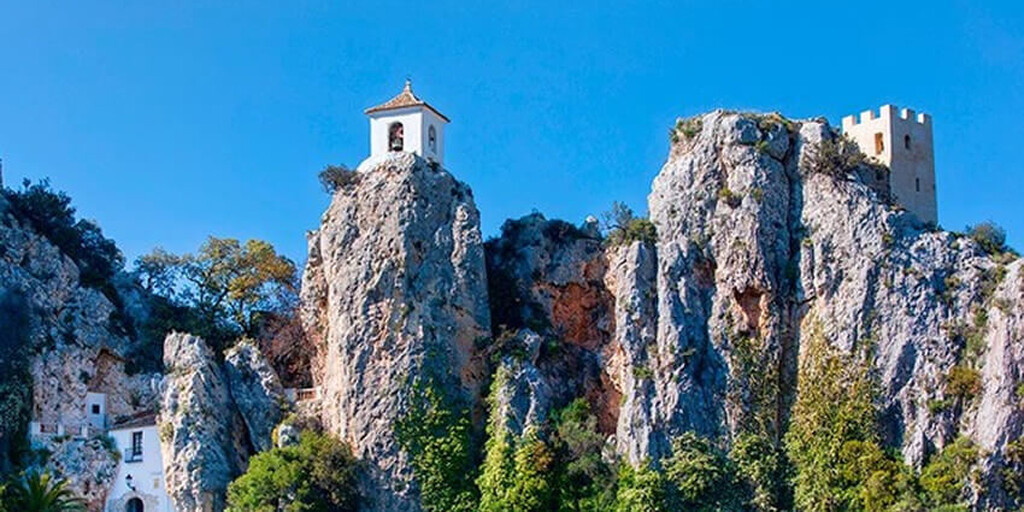
The nearly thousand-year-old village of Guadalest is entirely situated around the castle. The castle, simply called El Castell de Guadalest, served for many years as a key defense point for the Moors against the Spanish. Because Guadalest was only accessible through a rock-hewn entrance and the castle's towers rose above the cliffs like crow's nests, it was easy to defend. From the early 17th century, the Spanish held sway in Guadalest. Visitors to Guadalest also enjoy a beautiful view of the reservoir, built in the last century, which has supplied drinking water to a large part of the province of Alicante for many years.
Then follows a path along the reservoir. The road is well-maintained, but narrow. Passing isn't always possible for cars, so be considerate of others and use passing places.
There are regular views of Guadalest and/or the reservoir. In recent years, the reservoir's water level has been alarmingly low. This region experiences a constant water shortage, which mainly means you can't refresh your pool water. Once you've passed the reservoir, take the small road on the left, over a bridge, past the local swimming pool, to the village of Beniardà, where lunch awaits. Follow a narrow, winding path to the main square and then, just outside the village, you'll find the restaurant Meson La Mezquita. Enjoy!
The mountain stage is now truly about to begin. Benasau has only ten streets and hardly any sights, but the streets are picturesque and photogenic. People here take care of their homes and surroundings. Flowers bloom abundantly everywhere; there's a fountain with refreshing water, and the streets are shaded in cool shade. Park your vehicle near the church and wander the streets.
A little further away lies Beniloba. When the Moors were expelled from the country, 330 families, approximately 1,485 people, lived here. At the beginning of the twentieth century, when industry in the interior weakened, there was a mass exodus of young people, mainly to the United States, Argentina, and France. Fewer than 300 inhabitants remained. The 2010 census recorded 760 inhabitants. Monuments worth mentioning include the 17th-century Church of the Nativity of Our Lady of Benilloba, restored in 1995, and the 18th-century Palace of the Counts of Revillagigedo, built on a former medieval fortified house.
What can I say about Benifallim? Beautiful name, lovely town, where time seems to stand still. Visit the lavadero (washing place), just outside the village. If you're lucky, you might see some washing going on. The renovated castle is also worth a visit.
Penàguila, surrounded by olive and almond trees, is a wonderful place to enjoy nature, explore the mountains, and immerse yourself in history. The best place to begin your exploration of the town is the historic center, which will take you back in time.
Penàguila was built between the late 13th and early 14th centuries for military purposes. The medieval part of the village is therefore rectangular. It was originally a walled settlement, and sections of the wall can still be seen. At the center is the Baroque church, and just outside the village stands the inevitable castle, unfortunately now in ruins. Another place that reveals Penàguila's history is the Jardín de Santos, a magical garden where you can relax and let time pass. Nestled in a beautiful natural landscape, the garden is lined with trees and features a pavilion. This neoclassical building boasts a lake, a forest with several statues, a viewpoint, and a maze.
After exploring the historic part of Penàguila, it's time to immerse yourself in the local landscapes. If you've always dreamed of going on safari, you can visit Safari Aitana, nestled in the heart of the Sierra de Aitana Mountains. Elephants, llamas, giraffes, and lions all call this park home.
Sella boasts an abundance of water springs, which you can discover on a tour of the village. The Water Route, a half-hour walk, begins in the town center and takes you past the Font del Pi, the Font de l'Alcàntera, irrigation canals, old mills, and dams or pools of freshwater. If you visit on a Sunday, you might be lucky enough to witness a game of Valencian pilota, a deeply rooted and very exciting game. Take the opportunity to visit the Palace and Tower of the Barony, the Hermitage and Castle of Santa Barbara, the municipal washhouse, or the Pont Vell.
Enjoy a drink in Finistrat with a view of the Puig Campana. Who wouldn't want that? So don't hesitate and find a spot on a terrace. You'll find them on the main street at the intersection of Finestrat's historic center, with its narrow streets, white houses, and a castle.
And then it's almost over. Just a short distance to the finish line in Villajoyosa. An optional stop at the Museo del Chocolate Valor is a must for chocolate lovers and highly recommended for everyone else. Learn more about chocolate itself, the history of Valor dating back to its opening in 1881, and the art of chocolate making in the Valor chocolate factory. Admission is free!
 Links
Links  Usage
Usage Want to download this route?
You can download the route for free without MyRoute-app account. To do so, open the route and click 'save as'. Want to edit this route?
No problem, start by opening the route. Follow the tutorial and create your personal MyRoute-app account. After registration, your trial starts automatically.  Disclaimer
Use of this GPS route is at your own expense and risk. The route has been carefully composed and checked by a MyRoute-app accredited RouteXpert for use on TomTom, Garmin and MyRoute-app Navigation.
Changes may nevertheless have occurred due to changed circumstances, road diversions or seasonal closures. We therefore recommend checking each route before use.
Preferably use the route track in your navigation system. More information about the use of MyRoute-app can be found on the website under 'Community' or 'Academy'.
Changes may nevertheless have occurred due to changed circumstances, road diversions or seasonal closures. We therefore recommend checking each route before use.
Preferably use the route track in your navigation system. More information about the use of MyRoute-app can be found on the website under 'Community' or 'Academy'.
 Nearby routes
Valencia
About this region
The Valencian Community (Valencian: Comunitat Valenciana; Spanish: Comunidad Valenciana) is an autonomous community of Spain. It is the fourth most populous autonomous community after Andalusia, Catalonia and Madrid with more than five million inhabitants. Its homonymous capital Valencia is the third largest city and metropolitan area in Spain. It is located along the Mediterranean coast on the east side of the Iberian peninsula. It borders with Catalonia to the north, Aragon and Castilla–La Mancha to the west, and Murcia to the south. The Valencian Community consists of three provinces which are Castellón, Valencia and Alicante.
According to Valencia's Statute of Autonomy, the Valencian people are a nationality. Their origins date back to the Aragonese reconquest of the Moorish Taifa of Valencia, which was taken by James I of Aragon in 1238 during the Reconquista. The newly founded Kingdom of Valencia was granted wide self-government under the Crown of Aragon. Valencia experienced its golden age in the 15th century, as it became the Crown's economic capital. Self-government continued after the unification of the Spanish Kingdom, but was eventually suspended in 1707 by Phillip V of Spain as a result of the Spanish War of Succession. Valencian nationalism resurged towards the end of the 19th century, which led to the modern conception of the Valencian Country. Self-government under the Generalitat Valenciana was finally reestablished in 1982 after Spanish transition to democracy.
Many Valencian people speak Valencian, the region's own co-official language, also known as Catalan in other regions. Valencian was repressed and persecuted during Franco's dictatorship (1939–1975) in favor of Spanish. Since it regained official status in 1982 in the Valencian Statute of Autonomy, Valencian has been implemented in public administration and the education system, leading to an exponential increase in knowledge of its formal standard. According to the general survey from 2015, Valencian is understood by almost the entire population living within the Valencian Community and is spoken by a wide majority, but almost half of the population cannot write it. As of 2020, the population of the Valencian Community comprised 10.63% of the Spanish population.
Read more on Wikipedia
According to Valencia's Statute of Autonomy, the Valencian people are a nationality. Their origins date back to the Aragonese reconquest of the Moorish Taifa of Valencia, which was taken by James I of Aragon in 1238 during the Reconquista. The newly founded Kingdom of Valencia was granted wide self-government under the Crown of Aragon. Valencia experienced its golden age in the 15th century, as it became the Crown's economic capital. Self-government continued after the unification of the Spanish Kingdom, but was eventually suspended in 1707 by Phillip V of Spain as a result of the Spanish War of Succession. Valencian nationalism resurged towards the end of the 19th century, which led to the modern conception of the Valencian Country. Self-government under the Generalitat Valenciana was finally reestablished in 1982 after Spanish transition to democracy.
Many Valencian people speak Valencian, the region's own co-official language, also known as Catalan in other regions. Valencian was repressed and persecuted during Franco's dictatorship (1939–1975) in favor of Spanish. Since it regained official status in 1982 in the Valencian Statute of Autonomy, Valencian has been implemented in public administration and the education system, leading to an exponential increase in knowledge of its formal standard. According to the general survey from 2015, Valencian is understood by almost the entire population living within the Valencian Community and is spoken by a wide majority, but almost half of the population cannot write it. As of 2020, the population of the Valencian Community comprised 10.63% of the Spanish population.
View region
 Statistics
  16
16Amount of RX reviews (Valencia)
 28634
28634Amount of visitors (Valencia)
 353
353Amount of downloads (Valencia)
 Route Collections in this region
 Visiting Morella Albarracin and Beceite from Cerdanyola through fantastic secondary roads
Visiting Morella Albarracín and Beceite from Cerdanyola through fantastic secondary roads
This collection of 4 routes runs through the interior of Castellón and Teruel where one of the main attractions is its beautiful secondary roads. Several charming towns and good delicacies await us at each stage:
The first day will take us to Morella. Morella is an extraordinary example of a Gothic city and has been declared an Asset of Cultural Interest. In the first place, its castle and medieval walls stand out, erected in the 14th century. Within the old enclosure, it has remarkable churches, such as the archpriest of Santa María la Mayor, Gothic (1263-1330), with baroque details; the old convent of San Francisco (13th century); the churches of San Juan, Gothic (15th century) with neoclassical decoration, and of San Nicolás, Gothic; and the hermitages of San Marcos and San Pedro Mártir. In civil architecture, it is worth mentioning the Casa de la Villa (14th and 17th centuries), the Ciurana, Piquer, Rovira and Cardenal Ram houses, as well as the Hospital (15th century). Likewise, strolling through the set of stepped streets and the arcades of Blasco de Alagón, taking the circular tour of the mountain along the Paseo de la Alameda and contemplating the medieval aqueduct of Santa Llúcia outside are essential proposals to get to know this city. Two points of interest stand out in the municipality of Morella: the cave paintings of Morella La Vella, and the Sanctuary of the Virgin of Vallirana. Every six years, since 1673, the Virgin is carried up in procession to the city. On the shoulders of the road there are numerous chapels where the pilgrims make prayers and prayers on their 22-kilometre march. Along the way we will enjoy the fantastic views from Fores and the strange sensation of crossing a wind farm.
The second day brings us closer to Albarracín, passing through the no less interesting Teruel. Albarracín is a unique place. Strolling through its streets, going through its wall and entering its monuments is like taking a trip to the Middle Ages. You will admire every corner, its reddish-colored houses, its doors and knockers, its tiny windows with lace curtains or its continuous balconies in rich wrought iron and carved wood. The beautiful architectural and urban legacy of Albarracín exudes charm and calm. You will admire every corner, its reddish-colored houses, its doors and knockers, its tiny windows with lace curtains, its continuous balconies in rich wrought iron and carved wood. Not to mention the wonderful views that you will get from its enviable location. The Plaza Mayor, where the Town Hall is located, is a good place to start your visit to this picturesque town, which is home to a number of interesting monuments and museums, such as the cathedral, the churches of Santiago and Santa María, the Casa- Noble Museum of the Pérez and Toyuela family, the Municipal Museum and the Diocesan Museum. If you go with children, don't miss the Toy Museum. If you want to enjoy the natural environment of Albarracín, you can take a pleasant walk along the Guadalaviar River and walk along the riverside promenade next to the meander excavated by the river as it passes through the town. I recommend you use the car parks at the entrance to the town and wear comfortable shoes to avoid the numerous slopes and stairs that you will find during your tour of Albarracín. Another attraction that Albarracín offers you is the Territorio Dinópolis branch dedicated to the world of fossils and prehistoric seas: Mar Nummus. Nearby is one of the most surprising landscape and cultural complexes in Aragon: the Rodeno Pinares Protected Landscape. The chromatic contrasts between the green of the pine forest and the red of the rodeno stone create a space of great color, strength and beauty. Excellent samples of Levantine rock art are preserved in its rocky shelters, declared a World Heritage Site by UNESCO. The best way to get to know Albarracín is, without a doubt, enjoying a guided tour of its streets and its most emblematic monuments. They are organized by the Fundación Santa María and also by the tourist services company El Andador.
For the third day, two exciting visits await us: Valderrobres and Beciete.
Valderrobres is the capital of the Matarraña region. Without a doubt, its presence in this list of the most beautiful towns in Teruel and in Spain is more than justified. Its enclave next to the ports of Beceite and the passage of the Matarraña River through the center of the municipality enhances the monumentality of Valderrobres. It overflows with architectural, cultural and artistic heritage, and in addition, its is located in a wonderful natural environment, the Matarraña River with the reflection of the Valderrobres stone bridge. The capital of Matarraña is located just half an hour from Alcañiz and three quarters of an hour from Tortosa or Morella. Access can only be done by roads, which are in perfect condition. Valderrobres is a medium-sized town with about 2,500 inhabitants. Here you will find restaurant services, accommodation, grocery stores where you can get your typical products and other types of establishments common in a county seat. There are abundant archaeological sites that allow us to know the Iberian origin of the town although, as in the case of Calaceite, the maximum splendor of the Teruel town took place in the Middle Ages. And it is that during the fifteenth century it even hosted several sessions of the Courts of the Kingdom of Aragon presided over by King Alfonso V. The magic of Valderrobres is located in its historic center. I recommend that you leave your vehicle in one of its authorized car parks and go on foot to the main access to the historic center. You will cross the stone bridge over the Matarraña River. From there you will discover the spectacular silhouette formed by the castle and the Church of Santa María in the center of the old town. On the stone bridge dates from the fifteenth century. There you will find the Portal de San Roque, a place where the pontazgo right was collected during the Middle Ages and from which you will access the Plaza de España. In the Plaza de España you will discover the magnificent building of the Town Hall. It is a 16th century building with a large fish market and typical of the Aragonese Renaissance, including an Aragonese gallery and a large eaves carved in wood with vegetal decoration. The rest of the buildings maintain the same medieval aesthetic. From that moment you will think you have gone back to that time. From there you must go to the top of the hill to visit the monumental complex made up of the castle and the church. You will do it through narrow and steep streets. Don't miss any detail. They will fascinate you! When you finish your ascent through the cobbled streets you will find one of the treasures of the visit. The Church of Santa María la Mayor. In addition to the impressive rose window, which you have been seeing from afar, its portal stands out. splendid! The Church, dating from the 14th century, has been recently restored. It is an Aragonese Levantine Gothic temple in which its ribbed vaults stand out. Right next to it is the castle. At the beginning of December 2021, its restoration has been completed and together with the church they form a unique heritage complex. Do not hesitate to visit the castle. The visit is well worth it. Its spacious rooms will amaze you.
The final destination of this day is Beceite. The Ports of Beceite are a mountainous massif that separates the Ebro valley from the Mediterranean and extends between the provinces of Tarragona, Castellón and Teruel. Its steep mountains, pierced by numerous rivers and ravines, hide impressive places such as the Parrizal de Beceite, Las Rocas del Masmut, la Pesquera and the Salt de la Portellada. The best-known enclave is the Parrizal de Beceite, which offers a fantastic walk between stone walls and along the Matarraña riverbed itself. Entering the Parrizal is a fantastic experience, suitable for all ages given its ease. The route begins very close to Beceite and runs parallel to the Matarraña River. During the tour you will cross the river several times with the help of footbridges that will take you over small pools of transparent water. The path ends at Los Estrechos, where the river is channeled by vertiginous walls that reach an impossible width of 1.5 m. for 60 meters high and impressive stone needles known as Les Gubies. Keep in mind that access is regulated on weekends, bank holidays and high season. Another great attraction in the area is the Rocas del Masmut, an impressive reddish rock more than 100 meters high near Peñarroya de Tastavins, with a large colony of vultures. And do not forget to contemplate the beautiful 20-meter waterfall of El Salt, a few kilometers from the town of La Portellada. A great density of vegetation serves as a refuge for numerous animals, such as the Hispanic goat. Golden eagles, peregrine falcons and eagle owls also nest in this rugged landscape. The ravines pierced by crystal clear waters, among which the Pesquera and Escresala ravines stand out, with abundant native crabs and trout, are also the habitat of the dipper.
And as the end of this collection, following wonderful secondary roads, we will visit Horta de Sant Joan and Miravet.
Horta de Sant Joan is the tourist and cultural capital of La Terra Alta. This is a medieval town located on top of a 543 meter high hill. The The municipality is bounded to the south by Arnes, Paüls and Alfara de Carles, to the west by Lledó and Arenys de Lledó (Teruel), to the north by Caseres, Bot andto the east of Prat de Comte. Although the Ebro River does not pass through the Horta de SantJoan terminus, the Algars River which forms a dividing line between the province of Teruel in the western part, the river Estrets in the southern part of the term and the river Canaletes in the eastern part. All these rivers are tributaries or sub-tributaries of the Ebro River. The remains found indicate the uncertain origin of an Iberian settlement in the highest part. These lands were later conquered by Muslims and later by Christians. In the year 1174 the king ceded the town to the temple workers and they began a repopulation of Horta de Sant Joan, although it was not until the 19th century that there was significant growth.
Miravet is a fairly small town, but with several interesting places that are worth visiting. In half a day you can see almost everything, but if you can spend a little more time you will enjoy it much more. One of the must-sees is the Castle. Once at the visitor center we buy the tickets. The price is €5, although for students, youth card holders or retirees, among others, they have a €2 discount on the price. Summer opening hours are from 10:00 a.m. to 8:00 p.m., while in winter they close at 5:30 p.m., except for January and February, which close at 4:00 p.m. Inside the Miravet castle is a marvel and although it was partially destroyed during the Battle of the Ebro it is still well preserved.
Old Church: This church was built in the Renaissance period between the 16th and 17th centuries and remained abandoned for a long time until it was restored. Now it has become a cultural and historical monument of Miravet and quite an interesting visit. It is said that it was built where the old mosque from Muslim times might have previously been located. Inside you can see several permanent exhibitions on the history of Miravet or the Templars, among others. It is shaped like a cross and highlights a dome with sgraffito with a hole from a bomb impact during the Battle of the Ebro, in the midst of the Civil War. Also, there is a stone table made by the Templars in the 12th century and that was originally from the castle, until it was transferred to the church around 1750.
Historic center of Miravet: After visiting the church, you can discover the old quarter of the town, where there are very pretty corners and cobbled houses that we love. In the center of Miravet we can find outstanding buildings such as the Old Mill, the Portal del Motxi or the Palacio del Comendador. We continued walking through the old town until we reached the Plaza del Arenal (where we had parked). It is one of the best known and surprising activities that can be done in Miravet. In reality, it is nothing more than reaching the river and getting the car on a boat to cross it, in this way you reach the opposite side. But it is very surprising and people do it because it is the last boat crossing on the entire Ebro that works without a motor. An experience that will not leave you indifferent! The price for crossing to the other side of the river is €3 per vehicle, you can also cross without a car for €1 per person. Although crossing without a car does not make much sense, since on the other side of the river there is nothing until a few kilometers further on. But you can walk a bit along the path that runs alongside the Ebro. Hours are from 09:00 to 19:00, although in winter they close an hour earlier. If you have seen any photos of Miravet, it is probably from the pier. It is the best place to see the panorama of the town and from where you will also have the best views of the castle. We sat on the pier to have a snack while we enjoyed the tranquility of the place and the beautiful views. If you go at sunset you will have a beautiful sunset and the reflection of the views in the water, a perfect plan!
The 4 routes that make up this collection are:
1.- Cerdanyola to Morella. About 350 kms with 8 hours of duration
2.- From Morella to Albarracin visiting Teruel. 180 km with about 4.5 hours of duration.
3.- From Albarracin to Valderrobres and Beceite. 227 kms with a little less than 5 hours of duration
4.- From Beceite to Cerdanyola visiting Horta de Sant Joan and Miravet. 250 kms and just over 8 hours long.
This collection of 4 routes runs through the interior of Castellón and Teruel where one of the main attractions is its beautiful secondary roads. Several charming towns and good delicacies await us at each stage:
The first day will take us to Morella. Morella is an extraordinary example of a Gothic city and has been declared an Asset of Cultural Interest. In the first place, its castle and medieval walls stand out, erected in the 14th century. Within the old enclosure, it has remarkable churches, such as the archpriest of Santa María la Mayor, Gothic (1263-1330), with baroque details; the old convent of San Francisco (13th century); the churches of San Juan, Gothic (15th century) with neoclassical decoration, and of San Nicolás, Gothic; and the hermitages of San Marcos and San Pedro Mártir. In civil architecture, it is worth mentioning the Casa de la Villa (14th and 17th centuries), the Ciurana, Piquer, Rovira and Cardenal Ram houses, as well as the Hospital (15th century). Likewise, strolling through the set of stepped streets and the arcades of Blasco de Alagón, taking the circular tour of the mountain along the Paseo de la Alameda and contemplating the medieval aqueduct of Santa Llúcia outside are essential proposals to get to know this city. Two points of interest stand out in the municipality of Morella: the cave paintings of Morella La Vella, and the Sanctuary of the Virgin of Vallirana. Every six years, since 1673, the Virgin is carried up in procession to the city. On the shoulders of the road there are numerous chapels where the pilgrims make prayers and prayers on their 22-kilometre march. Along the way we will enjoy the fantastic views from Fores and the strange sensation of crossing a wind farm.
The second day brings us closer to Albarracín, passing through the no less interesting Teruel. Albarracín is a unique place. Strolling through its streets, going through its wall and entering its monuments is like taking a trip to the Middle Ages. You will admire every corner, its reddish-colored houses, its doors and knockers, its tiny windows with lace curtains or its continuous balconies in rich wrought iron and carved wood. The beautiful architectural and urban legacy of Albarracín exudes charm and calm. You will admire every corner, its reddish-colored houses, its doors and knockers, its tiny windows with lace curtains, its continuous balconies in rich wrought iron and carved wood. Not to mention the wonderful views that you will get from its enviable location. The Plaza Mayor, where the Town Hall is located, is a good place to start your visit to this picturesque town, which is home to a number of interesting monuments and museums, such as the cathedral, the churches of Santiago and Santa María, the Casa- Noble Museum of the Pérez and Toyuela family, the Municipal Museum and the Diocesan Museum. If you go with children, don't miss the Toy Museum. If you want to enjoy the natural environment of Albarracín, you can take a pleasant walk along the Guadalaviar River and walk along the riverside promenade next to the meander excavated by the river as it passes through the town. I recommend you use the car parks at the entrance to the town and wear comfortable shoes to avoid the numerous slopes and stairs that you will find during your tour of Albarracín. Another attraction that Albarracín offers you is the Territorio Dinópolis branch dedicated to the world of fossils and prehistoric seas: Mar Nummus. Nearby is one of the most surprising landscape and cultural complexes in Aragon: the Rodeno Pinares Protected Landscape. The chromatic contrasts between the green of the pine forest and the red of the rodeno stone create a space of great color, strength and beauty. Excellent samples of Levantine rock art are preserved in its rocky shelters, declared a World Heritage Site by UNESCO. The best way to get to know Albarracín is, without a doubt, enjoying a guided tour of its streets and its most emblematic monuments. They are organized by the Fundación Santa María and also by the tourist services company El Andador.
For the third day, two exciting visits await us: Valderrobres and Beciete.
Valderrobres is the capital of the Matarraña region. Without a doubt, its presence in this list of the most beautiful towns in Teruel and in Spain is more than justified. Its enclave next to the ports of Beceite and the passage of the Matarraña River through the center of the municipality enhances the monumentality of Valderrobres. It overflows with architectural, cultural and artistic heritage, and in addition, its is located in a wonderful natural environment, the Matarraña River with the reflection of the Valderrobres stone bridge. The capital of Matarraña is located just half an hour from Alcañiz and three quarters of an hour from Tortosa or Morella. Access can only be done by roads, which are in perfect condition. Valderrobres is a medium-sized town with about 2,500 inhabitants. Here you will find restaurant services, accommodation, grocery stores where you can get your typical products and other types of establishments common in a county seat. There are abundant archaeological sites that allow us to know the Iberian origin of the town although, as in the case of Calaceite, the maximum splendor of the Teruel town took place in the Middle Ages. And it is that during the fifteenth century it even hosted several sessions of the Courts of the Kingdom of Aragon presided over by King Alfonso V. The magic of Valderrobres is located in its historic center. I recommend that you leave your vehicle in one of its authorized car parks and go on foot to the main access to the historic center. You will cross the stone bridge over the Matarraña River. From there you will discover the spectacular silhouette formed by the castle and the Church of Santa María in the center of the old town. On the stone bridge dates from the fifteenth century. There you will find the Portal de San Roque, a place where the pontazgo right was collected during the Middle Ages and from which you will access the Plaza de España. In the Plaza de España you will discover the magnificent building of the Town Hall. It is a 16th century building with a large fish market and typical of the Aragonese Renaissance, including an Aragonese gallery and a large eaves carved in wood with vegetal decoration. The rest of the buildings maintain the same medieval aesthetic. From that moment you will think you have gone back to that time. From there you must go to the top of the hill to visit the monumental complex made up of the castle and the church. You will do it through narrow and steep streets. Don't miss any detail. They will fascinate you! When you finish your ascent through the cobbled streets you will find one of the treasures of the visit. The Church of Santa María la Mayor. In addition to the impressive rose window, which you have been seeing from afar, its portal stands out. splendid! The Church, dating from the 14th century, has been recently restored. It is an Aragonese Levantine Gothic temple in which its ribbed vaults stand out. Right next to it is the castle. At the beginning of December 2021, its restoration has been completed and together with the church they form a unique heritage complex. Do not hesitate to visit the castle. The visit is well worth it. Its spacious rooms will amaze you.
The final destination of this day is Beceite. The Ports of Beceite are a mountainous massif that separates the Ebro valley from the Mediterranean and extends between the provinces of Tarragona, Castellón and Teruel. Its steep mountains, pierced by numerous rivers and ravines, hide impressive places such as the Parrizal de Beceite, Las Rocas del Masmut, la Pesquera and the Salt de la Portellada. The best-known enclave is the Parrizal de Beceite, which offers a fantastic walk between stone walls and along the Matarraña riverbed itself. Entering the Parrizal is a fantastic experience, suitable for all ages given its ease. The route begins very close to Beceite and runs parallel to the Matarraña River. During the tour you will cross the river several times with the help of footbridges that will take you over small pools of transparent water. The path ends at Los Estrechos, where the river is channeled by vertiginous walls that reach an impossible width of 1.5 m. for 60 meters high and impressive stone needles known as Les Gubies. Keep in mind that access is regulated on weekends, bank holidays and high season. Another great attraction in the area is the Rocas del Masmut, an impressive reddish rock more than 100 meters high near Peñarroya de Tastavins, with a large colony of vultures. And do not forget to contemplate the beautiful 20-meter waterfall of El Salt, a few kilometers from the town of La Portellada. A great density of vegetation serves as a refuge for numerous animals, such as the Hispanic goat. Golden eagles, peregrine falcons and eagle owls also nest in this rugged landscape. The ravines pierced by crystal clear waters, among which the Pesquera and Escresala ravines stand out, with abundant native crabs and trout, are also the habitat of the dipper.
And as the end of this collection, following wonderful secondary roads, we will visit Horta de Sant Joan and Miravet.
Horta de Sant Joan is the tourist and cultural capital of La Terra Alta. This is a medieval town located on top of a 543 meter high hill. The The municipality is bounded to the south by Arnes, Paüls and Alfara de Carles, to the west by Lledó and Arenys de Lledó (Teruel), to the north by Caseres, Bot andto the east of Prat de Comte. Although the Ebro River does not pass through the Horta de SantJoan terminus, the Algars River which forms a dividing line between the province of Teruel in the western part, the river Estrets in the southern part of the term and the river Canaletes in the eastern part. All these rivers are tributaries or sub-tributaries of the Ebro River. The remains found indicate the uncertain origin of an Iberian settlement in the highest part. These lands were later conquered by Muslims and later by Christians. In the year 1174 the king ceded the town to the temple workers and they began a repopulation of Horta de Sant Joan, although it was not until the 19th century that there was significant growth.
Miravet is a fairly small town, but with several interesting places that are worth visiting. In half a day you can see almost everything, but if you can spend a little more time you will enjoy it much more. One of the must-sees is the Castle. Once at the visitor center we buy the tickets. The price is €5, although for students, youth card holders or retirees, among others, they have a €2 discount on the price. Summer opening hours are from 10:00 a.m. to 8:00 p.m., while in winter they close at 5:30 p.m., except for January and February, which close at 4:00 p.m. Inside the Miravet castle is a marvel and although it was partially destroyed during the Battle of the Ebro it is still well preserved.
Old Church: This church was built in the Renaissance period between the 16th and 17th centuries and remained abandoned for a long time until it was restored. Now it has become a cultural and historical monument of Miravet and quite an interesting visit. It is said that it was built where the old mosque from Muslim times might have previously been located. Inside you can see several permanent exhibitions on the history of Miravet or the Templars, among others. It is shaped like a cross and highlights a dome with sgraffito with a hole from a bomb impact during the Battle of the Ebro, in the midst of the Civil War. Also, there is a stone table made by the Templars in the 12th century and that was originally from the castle, until it was transferred to the church around 1750.
Historic center of Miravet: After visiting the church, you can discover the old quarter of the town, where there are very pretty corners and cobbled houses that we love. In the center of Miravet we can find outstanding buildings such as the Old Mill, the Portal del Motxi or the Palacio del Comendador. We continued walking through the old town until we reached the Plaza del Arenal (where we had parked). It is one of the best known and surprising activities that can be done in Miravet. In reality, it is nothing more than reaching the river and getting the car on a boat to cross it, in this way you reach the opposite side. But it is very surprising and people do it because it is the last boat crossing on the entire Ebro that works without a motor. An experience that will not leave you indifferent! The price for crossing to the other side of the river is €3 per vehicle, you can also cross without a car for €1 per person. Although crossing without a car does not make much sense, since on the other side of the river there is nothing until a few kilometers further on. But you can walk a bit along the path that runs alongside the Ebro. Hours are from 09:00 to 19:00, although in winter they close an hour earlier. If you have seen any photos of Miravet, it is probably from the pier. It is the best place to see the panorama of the town and from where you will also have the best views of the castle. We sat on the pier to have a snack while we enjoyed the tranquility of the place and the beautiful views. If you go at sunset you will have a beautiful sunset and the reflection of the views in the water, a perfect plan!
The 4 routes that make up this collection are:
1.- Cerdanyola to Morella. About 350 kms with 8 hours of duration
2.- From Morella to Albarracin visiting Teruel. 180 km with about 4.5 hours of duration.
3.- From Albarracin to Valderrobres and Beceite. 227 kms with a little less than 5 hours of duration
4.- From Beceite to Cerdanyola visiting Horta de Sant Joan and Miravet. 250 kms and just over 8 hours long.
View Route Collection
A 5-day tour from Peniscola visiting Toledo Merida Avila Segovia Siquenza Barcelona
A 5-route, 5-day tour of Peniscola, Aranjuez, Toledo, Consuegra, Molinos, Merida, Avila, Segovia, seguiranza and Barcelona, taking in these sites will immerse you in the rich history and culture of Spain. From stunning medieval fortresses to charming windmill villages, you will pass through picturesque roads enjoying the exquisite local cuisine and natural beauty that each place has to offer. It will be an unforgettable experience full of discoveries and unforgettable moments. Definitely a trip worth taking!
View Route Collection