
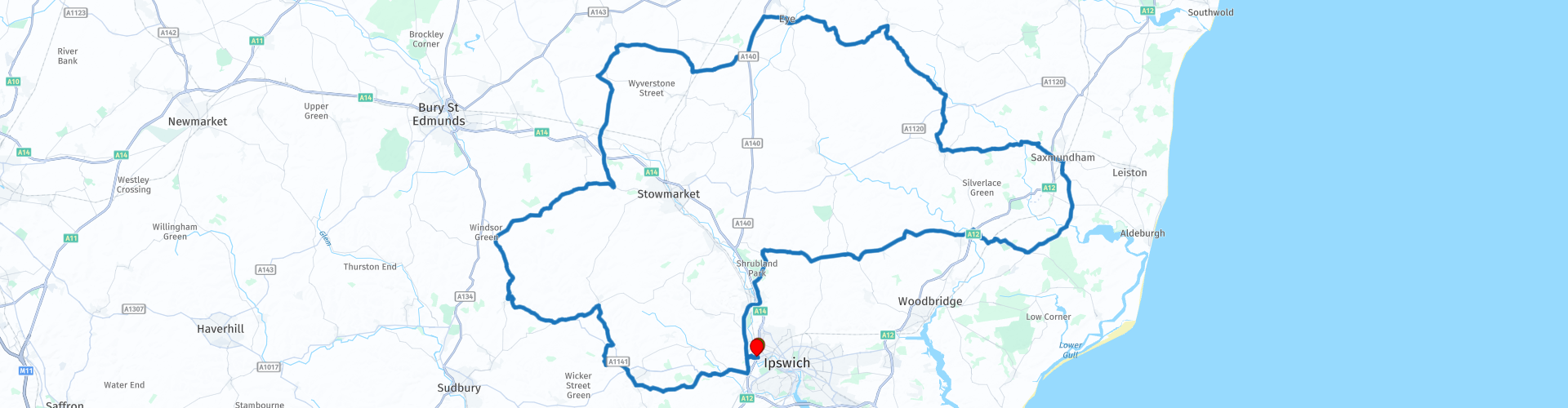
Central Suffolk

This route was brought to you by:
RouteXpert Steve Montreal
Last edit: 01-08-2025
 Route Summary
 Thats why the route easily deserves its 4* rating.
 Share this route


Animation

Verdict


Duration
8h 6m

Mode of travel
Car or motorcycle

Distance
172.80 km

Countries

 RouteXpert Review
 This ride is far more than just a journey; it is an immersive tour through centuries of English heritage, punctuated by the serene beauty of the River Brett valley and the vibrant echoes of past eras.
The adventure begins in the service area beside the main A14 trunk road. Here you can find everything needed by man & machine for the adventure ahead.
After a short winding ride, you arrive in Hadleigh, an ancient market town that immediately impresses with its remarkably preserved buildings and distinctive character, nestled beautifully in the lush and fertile valley of the River Brett. The town’s old layout distinctly reflects Roman town planning, a nod to its proximity to Colchester, once the capital of Roman Britannia.
Beyond its Roman roots, Hadleigh has been a muse for artists; its countryside inspired greats like Constable and Gainsborough, while the East Anglian School of Painting & Drawing, founded here in 1939 by distinguished painters Cedric Morris and Arthur Lett Haines, nurtured remarkable talents such as Lucian Freud and Maggi Hambling.
Continuing your journey, to discover Kersey, often hailed as the prettiest village in Suffolk.
It's an almost unspoilt medieval village, with its main street wonderfully lined by 14th to 16th-century timber-framed houses. A unique feature is the ford across the River Brett, affectionately known as ‘The Splash’.
Kersey's prosperity stemmed from the 12th century wool trade, famed for its coarse twill cloth, 'Kersey Cloth', which was vital to Medieval England's textile industry.
Its timeless charm has made it a popular film set for TV shows like Lovejoy and Magpie Murders, and even the advert launching the Austin Metro.
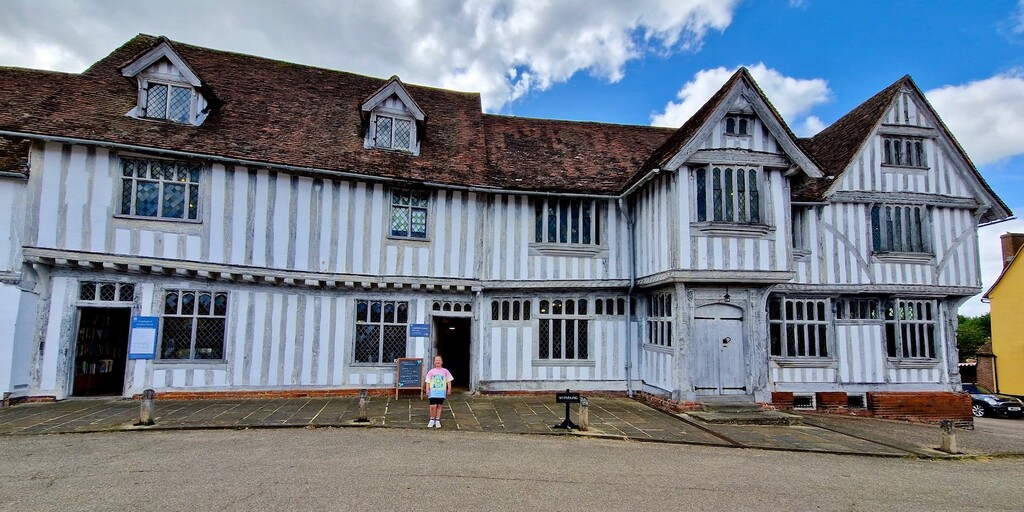
The route continues to Lavenham, arguably one of England’s best-preserved medieval villages, boasting more than 300 historic listed buildings.
Its incredible wealth in the Middle Ages, derived from the booming wool and cloth trade, saw it ranked as the 14th richest town in the country by 1524, surpassing even major cities like Lincoln and York in tax contributions. This prosperity is evident in its magnificent architecture, including the lavish gothic church with its imposing 43-meter tower, and streets lined with opulent timber-framed houses.
Pushing deeper into the heart of Suffolk, you will reach Rattlesden, a village with a rich maritime and wartime past.
The River Gipping rises nearby and flows down the valley to join the River Orwell at Ipswich. The river was navigable back in 860 AD when the Danes used it to establish the village of Ratles-Dane.
Between 1065-95, Caen stone was brought from Normandy, up the Rivers Gipping and Rat to Rattlesden, then transported to Bury St. Edmunds to build the Abbey.
A unique landmark is the arch formed by a pair of whalebones, replicas of the 9th-century originals, set up across the stream by a local craftsman.
The journey continues to the area around RAF Eye Airfield and the town of Eye
RAF Eye was one of the last wartime airfields built, from which the US 8th Air Force flew B-24 and B-17 bombers.
After VE Day, these planes famously carried food to flooded areas of the Netherlands and repatriated French, Spanish, and Belgian POWs.
Today, it’s remarkably the site of the world's first poultry litter-fuelled generating plant, built in 1992, which produces 12.7 MW of power by consuming 140,000 tonnes of chicken litter annually.
The town of Eye itself, deriving its name from the Old English for "island, land by water” due to being surrounded by water and marshland by the River Dove, was home to a Norman castle built in 1071 as a military and administrative headquarters.
Its prison continued in use until the early 17th century, though most of the castle was demolished in the 14th century. Eye also holds the unique distinction of being the smallest borough in the country, based on King John's 1205 Charter.
The flowing road east takes you to Stradbroke, whose impressive 30-meter church tower is visible for miles, featuring a staircase turret and grotesque gargoyles.
Inside, the Victorian stained glass and finely carved woodwork, especially the font, are notable.
An American flag hangs proudly by the chancel arch, presented to the village by the US 95th Bomber Group in August 1945, a poignant memorial to their WWII presence.
In Dennington, a pleasant stop can be made at The Neathouse Cafe, on the village green, for Coffee and refreshments.
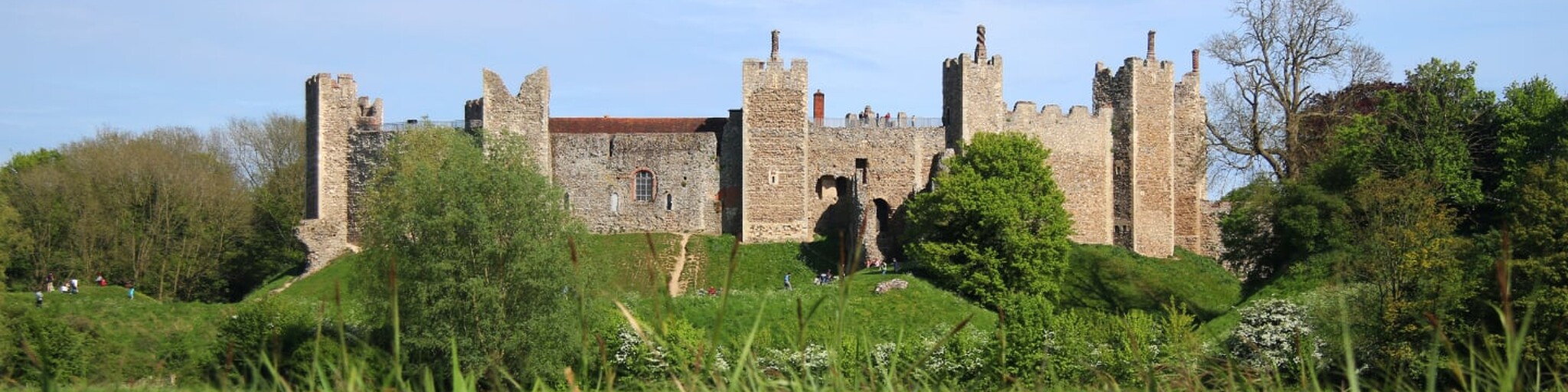
Next, is Framlingham, a vibrant market town dominated by its magnificent 12th-century castle.
This historic fortress famously sheltered Mary I in 1553 before she journeyed to London to claim her throne.
St. Michael’s church houses the tomb of Henry Fitzroy, the illegitimate son of Henry VIII.
Framlingham also has a modern claim to fame as the childhood home of multi-award-winning singer-songwriter Ed Sheeran, whose 2017 hit ‘Castle on the Hill’ was directly inspired by this very castle.
The castle itself was built by Roger Bigod’s grandson towards the end of the 12th century, a reward for Roger, a Norman who came with William the Conqueror, for his loyalty.
The journey east continues along the entertaining road to Saxmundham, an historic market town on the old London coach route. Its charming Georgian and Victorian shops and houses, some dating back to Elizabethan times like Monks Cottages and Angel Yard, speak of its long history.
Situated in the valley of the River Fromas, a tributary of the Alde, Saxmundham has held a market charter since 1272 AD, a tradition that continues every Wednesday.
A short distance away lies Snape Maltings, a cultural hub born from an industrial past.
The original purpose of the Maltings was the malting of barley for brewing beer.
Once disused for malting, composer Benjamin Britten had the vision to see the largest Malthouse, in its magnificent setting overlooking the saltings, as a possible site for the Aldeburgh Music Festival.
His vision came to life with the Snape Maltings Concert Hall, opened by Queen Elizabeth II at the start of the 1967 Aldeburgh Festival.
For those interested in a Route option, a visit to the Cold War Museum is highly recommended.
Based in the USAF hardened command post on the former Bentwaters airfield (accessible by staying on the B1069 for 2km, then turning left onto the airfield), it is the only such building open regularly to the public in the UK and Europe.
The main "war operations room" and "Battle cabin" have been meticulously restored to their original condition, as have the BT telephone exchange room, decontamination showers, and airlock. Other exhibition rooms cover RAF Bentwaters' history from WWII until its closure in 1993.
The ride through to Wickham Market unveils a rich and eerie history.
Once a pivotal point for access to Framlingham, it held a weekly market and two fairs granted by Henry VI in 1440.
On its outskirts, Dragarse Hill holds chi
A plaque marks the jagged wooden stump where the crossbar gibbet once stood. Snell’s corpse was displayed in an iron cage as a warning, his remains mouldering until 1740 when he was lowered and buried nearby.
The ghost of Jonah Snell is still reported to frequent the area.
Passing through Charsfield, which was a key location for the 1974 film Akenfield, and hosted the first Greenbelt festival, an annual arts, faith, and justice event, in the same year.
The village churchyard is also the resting place of former Ferrari F1 driver Michael Parkes, whose career was cut short by a crash in 1967 after famously replacing John Surtees.
Debach offered another poignant connection to WWII, as one of the last heavy bomber stations built for the American 8th Army Air Force.
The 493rd Bomb Group, flying B-24 Liberators and B-17 Flying Fortresses, conducted 157 missions from here, with their first mission notably on D-Day, June 6th, 1944.
After the US forces left, a small museum on site now preserves its history.
Further south, Coddenham reveals its Roman significance, having been the largest settlement in Suffolk during the Roman occupation, with the Roman road from Colchester running through it.
Its place-name means 'Codda's homestead.'
The village was also the home of local MX racer Dave Bickers, who competed in the World Championships from 1959-69, winning two European MX championships and being a member of British teams that won two Motocross des Nations and two Trophée des Nations. Bickers was awarded Motorcycle News 'Man of the Year' in 1960.
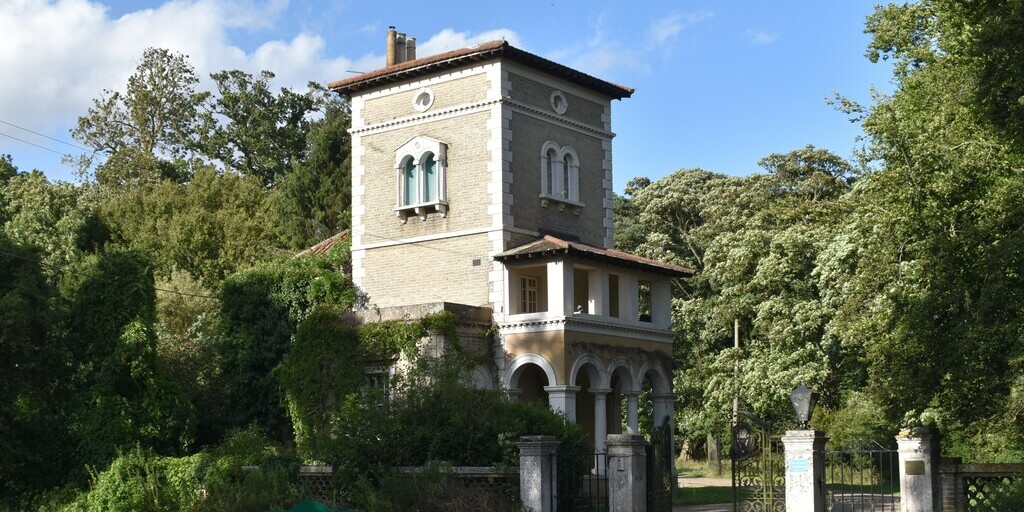
Nearby is Coddenham Lodge (also known as the Northern Gatehouse), the newest of three ornate gatehouses on the Shrublands Estate, was built in 1849. The South or Barham Lodge was built in 1841, and the north-western Needham Lodge was built before 1840.
Barham Lodge is the main entrance to the Shrublands Estate.
The Hall occupies a dramatic site at the top of a steep escarpment and overlooks an elaborate collection of gardens.
The building was used by the army during WW1 and WW2.
There is a rich history of motorsport here, with a hill climb competition run up the main drive for many years, famously won by my wife’s uncle in 1926 in his Frazer Nash & a scrambles (MX) track was also here in the 60s, with Britain's top riders, including local lad Dave Bickers, regularly competing.
Finally, the route concludes with a truly modern marvel near Blakenham, the UK's biggest semi-closed glasshouse, spanning the size of 11 football pitches.
This technologically advanced farming facility grows 250,000 tomato plants, aiming to produce 130 million tomatoes annually. The tomato crop is pollinated by bumblebees and watered entirely by roof water which is captured and flows into a 61,000,000-
With the incredibly rich and varied points of interest, the roads through central Suffolk remain a joy to ride.
The network of B-roads and unclassified lanes are generally well-maintained, offering excellent surfaces for confident cornering and a smooth flow.
While the very smallest lanes might present occasional coarser tarmac or minor imperfections, these are easily navigable and add to the authentic rural feel.
Traffic is generally light, particularly away from the main towns, ensuring a relaxed pace conducive to absorbing the surroundings. The gentle, rolling terrain provides just enough engaging undulation without being demanding, making this route highly accessible and enjoyable for riders of all skill levels.
It's a journey designed for discovery and appreciation, not high-speed performance.
 Links
Links  Usage
Usage Want to download this route?
You can download the route for free without MyRoute-app account. To do so, open the route and click 'save as'. Want to edit this route?
No problem, start by opening the route. Follow the tutorial and create your personal MyRoute-app account. After registration, your trial starts automatically.  Disclaimer
Use of this GPS route is at your own expense and risk. The route has been carefully composed and checked by a MyRoute-app accredited RouteXpert for use on TomTom, Garmin and MyRoute-app Navigation.
Changes may nevertheless have occurred due to changed circumstances, road diversions or seasonal closures. We therefore recommend checking each route before use.
Preferably use the route track in your navigation system. More information about the use of MyRoute-app can be found on the website under 'Community' or 'Academy'.
Changes may nevertheless have occurred due to changed circumstances, road diversions or seasonal closures. We therefore recommend checking each route before use.
Preferably use the route track in your navigation system. More information about the use of MyRoute-app can be found on the website under 'Community' or 'Academy'.
 Nearby routes
East of England
About this region
The East of England is one of the nine official regions of England. This region was created in 1994 and was adopted for statistics purposes from 1999. It includes the ceremonial counties of Bedfordshire, Cambridgeshire, Essex, Hertfordshire, Norfolk and Suffolk. Essex has the highest population in the region.The population of the East of England region in 2018 was 6.24 million.Bedford, Luton, Basildon, Peterborough, Southend-on-Sea, Norwich, Ipswich, Colchester, Chelmsford and Cambridge are the region's most populous towns. The southern part of the region lies in the London commuter belt.
Read more on Wikipedia
View region
 Statistics
  22
22Amount of RX reviews (East of England)
 22566
22566Amount of visitors (East of England)
 1057
1057Amount of downloads (East of England)
 Route Collections in this region
 The Ultimate 10 Day (North) UK Tour
Starting from and returning to Harwich ferry port, this tour follows the east coast of England up to the Highlands of Scotland and returns via the Lake District. It visits 6 of the UK's national parks and explores 2 islands and visits 2 James Bond 007 film locations.
Daily highlights.
Day 1, Harwich to Wells Next the Sea:
Southwold lighthouse, Cromer Crab lunch and sleeping on a Dutch barge.
Day 2, Wells Next the Sea to Middlesbrough:
Royal Sandringham Estate, Humber Bridge, a lap of Oliver's Mount, North York Moors National Park, Whitby Abbey the inspiration for Dracula.
Day 3, Middlesbrough to Dundee:
Tees Transporter Bridge, Angel of the North, Bamburgh Castle, Holy Island of Lindisfarne.
Day 4, Dundee to Inverness:
Cairngorms National Park, Balmoral Castle, Whisky Distilleries.
Day 5, Inverness to Ullapool:
Exceptional Landscapes, Falls of Shin, Loch Drumbeg Viewpoint, Kylesku Bridge.
Day 6, Ullapool to Dornie:
Kinlochewe viewpoint, Applecross Pass, Isle of Skye.
Day 7, Dornie to Keswick:
Eilean Donan Castle (007), Glencoe Pass, Glen Etive (007), Loch Lomond and Trossachs National Park.
Day 8, Keswick to Kendal:
A tour of the Lake District National Park visiting 6 of the best passes including Wrynose Pass and Hardknott Pass and 7 of the great lakes including Ullswater and Windermere.
Day 9, Kendal to Matlock:
Yorkshire Dales National Park, Ribblehead Viaduct, Peak District National Park, Snake Pass, Matlock Bath (motorcycle Mecca).
Day 10, Matlock to Harwich:
Heckington Windmill, Moulton Windmill, Dutch Quarter in Colchester.
By starting from Harwich, this tour avoids the traffic congestion of the south east and London making it perfect for European visitors wanting to see some of the best landscapes and sights that the north of the UK has to offer.
The cost of the ferry from Hoek Van Holland to Harwich return for motorcycle and rider costs £139.00 (163.51 Euro) (in 2019) which includes a cabin on the outward leg.
Where possible, motorways have been avoided and scenic routes are used every day.
Enjoy.
Daily highlights.
Day 1, Harwich to Wells Next the Sea:
Southwold lighthouse, Cromer Crab lunch and sleeping on a Dutch barge.
Day 2, Wells Next the Sea to Middlesbrough:
Royal Sandringham Estate, Humber Bridge, a lap of Oliver's Mount, North York Moors National Park, Whitby Abbey the inspiration for Dracula.
Day 3, Middlesbrough to Dundee:
Tees Transporter Bridge, Angel of the North, Bamburgh Castle, Holy Island of Lindisfarne.
Day 4, Dundee to Inverness:
Cairngorms National Park, Balmoral Castle, Whisky Distilleries.
Day 5, Inverness to Ullapool:
Exceptional Landscapes, Falls of Shin, Loch Drumbeg Viewpoint, Kylesku Bridge.
Day 6, Ullapool to Dornie:
Kinlochewe viewpoint, Applecross Pass, Isle of Skye.
Day 7, Dornie to Keswick:
Eilean Donan Castle (007), Glencoe Pass, Glen Etive (007), Loch Lomond and Trossachs National Park.
Day 8, Keswick to Kendal:
A tour of the Lake District National Park visiting 6 of the best passes including Wrynose Pass and Hardknott Pass and 7 of the great lakes including Ullswater and Windermere.
Day 9, Kendal to Matlock:
Yorkshire Dales National Park, Ribblehead Viaduct, Peak District National Park, Snake Pass, Matlock Bath (motorcycle Mecca).
Day 10, Matlock to Harwich:
Heckington Windmill, Moulton Windmill, Dutch Quarter in Colchester.
By starting from Harwich, this tour avoids the traffic congestion of the south east and London making it perfect for European visitors wanting to see some of the best landscapes and sights that the north of the UK has to offer.
The cost of the ferry from Hoek Van Holland to Harwich return for motorcycle and rider costs £139.00 (163.51 Euro) (in 2019) which includes a cabin on the outward leg.
Where possible, motorways have been avoided and scenic routes are used every day.
Enjoy.
View Route Collection
8 beautiful routes through England
"8 beautiful routes through England"
You may have seen one of these routes pass by. Eight routes have been driven and made in 2018.The routes are part of a 9-day trip through England. You drive through landscapes that are varied and beautiful. You can see beautiful rolling hilly vistas.
The main roads are of reasonable to good quality, but you also drive on roads that are less maintained and there may be some gravel on the roads here and there.
In general, they are beautiful routes through a beautiful country. The routes are connecting and turn left around London. The start and end points of the routes are Hull.
The collection contains the following routes;
Day 1 from Hull to Ashbourne (224 km)
Day 2 from Ashbourne to Birdlip (245 km)
Day 3 from Birdlip to Feldbridge (295 km)
Day 4 from Feldbridge to Whitstable (250 km)
Day 5 from Whitstable to Colchester (227 km)
Day 6 from Colchester to Hinckley (233 km)
Day 7 Tour and visit Triumph Factory and National Motorcycle Museum (77 km)
Day 8 from Hinckley to Hull (262 km)
All routes have been checked and leveled for Tomtom, Garmin and MyRoute-App Navigation. The routes follow the original route as they were made at the time.
Have fun driving one of these routes. Enjoy all the beauty that England has to offer, such as; The Clumberpark, Bolsover Castle, The Seven Sisters, The White Ciffs of Dover. Of course, a visit to the Triuph factory and the National Motorcycle Museum is also highly recommended.
You may have seen one of these routes pass by. Eight routes have been driven and made in 2018.The routes are part of a 9-day trip through England. You drive through landscapes that are varied and beautiful. You can see beautiful rolling hilly vistas.
The main roads are of reasonable to good quality, but you also drive on roads that are less maintained and there may be some gravel on the roads here and there.
In general, they are beautiful routes through a beautiful country. The routes are connecting and turn left around London. The start and end points of the routes are Hull.
The collection contains the following routes;
Day 1 from Hull to Ashbourne (224 km)
Day 2 from Ashbourne to Birdlip (245 km)
Day 3 from Birdlip to Feldbridge (295 km)
Day 4 from Feldbridge to Whitstable (250 km)
Day 5 from Whitstable to Colchester (227 km)
Day 6 from Colchester to Hinckley (233 km)
Day 7 Tour and visit Triumph Factory and National Motorcycle Museum (77 km)
Day 8 from Hinckley to Hull (262 km)
All routes have been checked and leveled for Tomtom, Garmin and MyRoute-App Navigation. The routes follow the original route as they were made at the time.
Have fun driving one of these routes. Enjoy all the beauty that England has to offer, such as; The Clumberpark, Bolsover Castle, The Seven Sisters, The White Ciffs of Dover. Of course, a visit to the Triuph factory and the National Motorcycle Museum is also highly recommended.
View Route Collection